The Best Large Language Models (LLMs) of 2026: A Complete Guide
Everyone is talking about downloading open source models to local machines. Nobody mentions the massive hardware costs. You need a three thousand dollar GPU to run them without crashing.
Chatbots are just visual wrappers on your screen. If you want to automate business operations, you must understand the engines powering them underneath. You do not need a trillion parameter model to write a basic email.
In my practical testing, the best large language models are not always the biggest. They are the most efficient. We test these engines daily at GuideAITools to separate marketing hype from actual production value.
What is a Large Language Model (LLM)?
A Large Language Model is a machine learning engine built on a transformer neural network. It predicts the next logical token in a sequence of text.
Most people confuse consumer apps with underlying technology. You might read tutorials on how to use ChatGPT for marketing. ChatGPT is just the software interface. The actual LLM doing the thinking is GPT-4o or GPT-5.6.
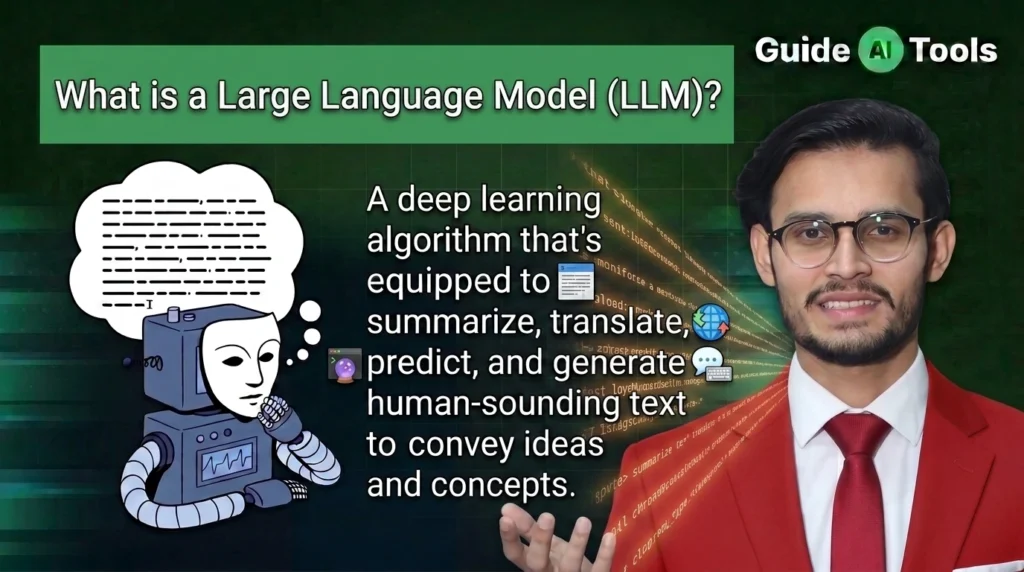
These models do not actually read words like a human. They process text as mathematical vectors. The engine calculates the statistical probability of the next correct word fragment based on training data.
The Best Large Language Models (LLMs) in 2026
The AI market moves incredibly fast. We track the top performers based on context window limits and actual architecture sizes.
Proprietary companies often hide their exact parameter counts. We have compiled the most accurate industry estimates based on recent leaks and official research papers.
| Model Name | Developer | Parameters (Active/Total) | Context Window | Access Type |
| GPT-4o / GPT-4 | OpenAI | ~280B / ~1.8 Trillion | 128k Tokens | Proprietary API |
| Claude 3.5 Sonnet | Anthropic | ~300B to 400B Estimated | 200k Tokens | Proprietary API |
| Gemini 1.5 Pro | ~1.6T to 2 Trillion Estimated | 2 Million Tokens | Proprietary API | |
| DeepSeek V4 | DeepSeek | 21B / 236B | 128k Tokens | Open Weights |
| Llama 3.1 | Meta | 405B Dense | 128k Tokens | Open Weights |
| Muse Spark | Meta | Undisclosed (1M Context) | 1 Million Tokens | Open Weights |
| Mistral Large 2 | Mistral AI | 123B Dense | 128k Tokens | Open Weights |
| Command R+ | Cohere | 104B Dense | 128k Tokens | Proprietary API |
The Ultimate 2026 LLM Directory (28 Models & Tools)
Some competitors list UI wrappers and pretend they are core models, but we track the actual underlying architecture. Here are the 28 specific models and deployment tools you need to know this year.
Top Proprietary Frontier Models
These models require a paid API subscription. Data processing happens on remote corporate servers.
| Tool Name | Best Used For |
| GPT-4o | Fast voice interactions and processing visual inputs efficiently. |
| GPT-5.6 | Heavy data processing and complex system architecture design. |
| Claude 3.5 Sonnet | Writing natural code and formatting complex text outputs. |
| Claude 4 Opus | Extreme reasoning and high level strategic planning tasks. |
| Gemini 1.5 Pro | Reading massive PDF libraries up to 2 million tokens. |
| Gemini 1.5 Flash | High speed operations and basic text extraction tasks. |
| Grok 2 | Real time X data access and completely unfiltered responses. |
| Command R+ | Enterprise retrieval tasks and automated citation generation. |
Top Open Weights Base Models
You can download these directly to your own hardware. You control the privacy completely.
| Tool Name | Best Used For |
| Llama 3.1 405B | Rivaling proprietary models on massive enterprise data clusters. |
| Llama 3.1 70B | The gold standard for self hosted mid tier business tasks. |
| Llama 3.1 8B | Running locally on standard consumer gaming laptops. |
| Muse Spark | Managing massive one million token contexts for creative writing. |
| Muse Glimmer | Running local agents on small 30 billion parameter hardware. |
| DeepSeek V3 | Extremely cheap API calls and solid coding ability. |
| DeepSeek V4 | Mixture of Experts architecture for high speed math. |
| Mistral Large 2 | Multilingual processing and strict European data compliance. |
| Mixtral 8x22B | Running heavy reasoning tasks on limited enterprise hardware. |
| Qwen 2.5 72B | Exceptional mathematics and non English language processing. |
| Gemma 2 27B | Google research model optimized for academic edge devices. |
| Phi-4 | Microsoft tiny model optimized to run on mobile phones. |
| Falcon 180B | Heavy raw text generation for research supercomputers. |
| DBRX | Databricks model tailored for internal company data querying. |
| AI21 Jamba | Mamba architecture blending high speed with large context. |
Reasoning Engines and Deployment Frameworks
You need specific software to run open source models. These tools make deployment possible.
| Tool Name | Best Used For |
| OpenAI o1 | Solving math Olympiad problems and deep physics equations. |
| OpenAI o3 | Next generation chain of thought engineering tasks. |
| DeepSeek R1 | Open source alternative to OpenAI reasoning logic paths. |
| LM Studio | Desktop app to download and chat with local models easily. |
| Ollama | Command line tool to run Llama models instantly on Mac or PC. |
| vLLM | High throughput server software for hosting your own custom API. |
Proprietary vs Open Source LLMs
Proprietary models are locked behind corporate firewalls. You rent access through API connections.
When you use the standard Google AI search mode, your data travels directly to Google servers. The company maintains the hardware and updates logic silently. You pay per token without worrying about infrastructure maintenance.
Open source models let you download actual model weights from Hugging Face. They are free to download but they are definitely not free to run.
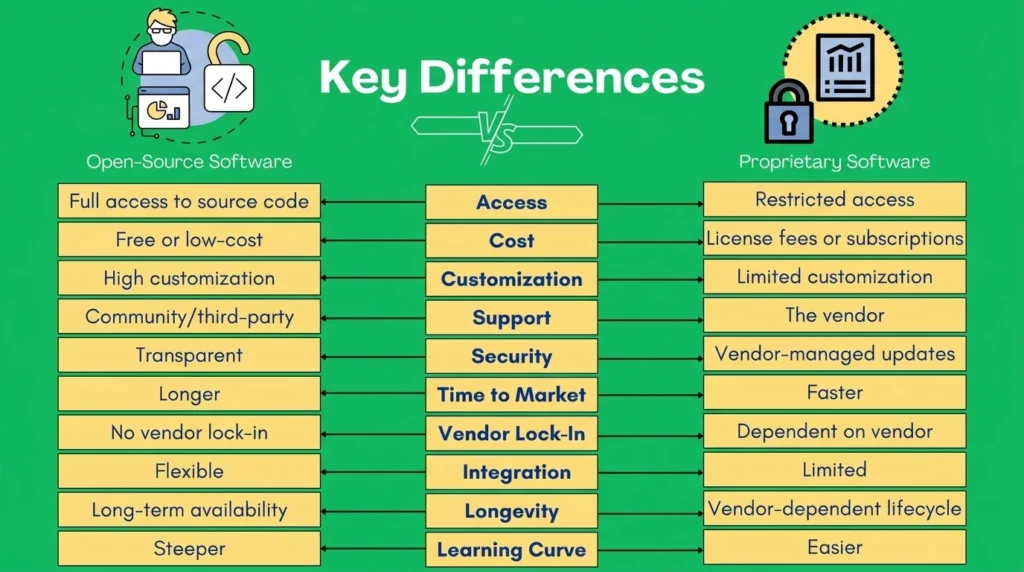
If you want to host an open model locally, you must respect physical hardware limits.
- Running an 8B parameter model requires at least 8GB of VRAM.
- A 32B parameter model requires 24GB of VRAM.
- Running a 70B parameter model requires dual GPUs with 64GB of VRAM combined.
- A 405B parameter model requires enterprise server racks costing hundreds of thousands of dollars.
We always tell clients at GuideAITools to start with proprietary APIs before buying expensive hardware.
How Do LLMs Actually Work?
These engines process information using a Transformer architecture. They break your sentence down into chunks called tokens.
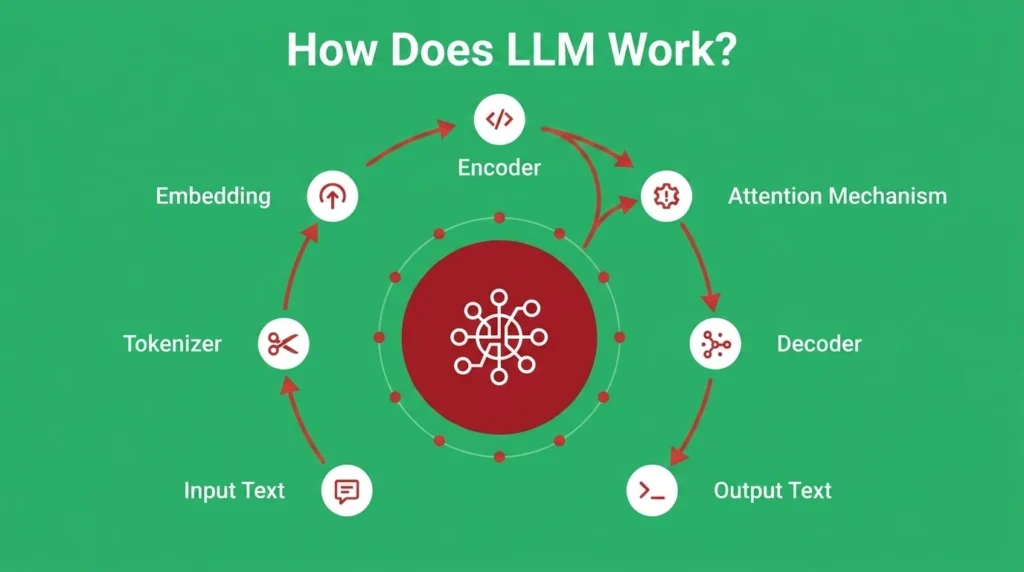
A token is roughly three quarters of a single English word. The model calculates mathematical attention scores between every single token in your prompt. This helps it understand context instantly.
Modern models now use a Mixture of Experts architecture to save computing costs. Instead of forcing the entire neural network to calculate an answer, the system routes your prompt to specific sub networks.
OpenAI uses this setup for GPT-4 to activate only 280 billion parameters out of a massive 1.8 trillion parameter cluster. This selective routing drops the active computing load significantly and speeds up response times.
What Are Reasoning Models?
Standard LLMs predict the next word instantly. This represents System 1 thinking.
Reasoning models represent System 2 thinking. They stop and generate a hidden chain of thought before outputting the final answer. They test multiple hypotheses against each other internally.
We see this in action with the Anthropic Claude auto mode and OpenAI o3. You give them a physics problem and they spend thirty seconds writing internal logic paths. This extra processing time radically reduces hallucination rates for hard math and coding tasks.
What Can LLMs Be Used For?
Most beginners use chatbots for basic creative writing. True business value comes from structuring unstructured data into predictable formats.
Retrieval Augmented Generation is the most valuable enterprise use case right now. You connect an LLM to your internal company database. The model reads private PDFs and answers employee questions based strictly on that data. It stops hallucinations because it only quotes retrieved documents.
Coding automation is another massive use case. When you use the best AI development tools, the LLM sits inside your code editor. It reads your entire repository and suggests complete function logic as you type.
If you want to know which AI tool is best for writing, you have to match the model to the task. Claude formats JSON data flawlessly. Gemini reads massive books. GPT handles conversational tone best.
FAQs
What is a large language model (LLM)?
It is an advanced machine learning engine that uses transformer architecture to predict and generate text based on massive training datasets.
What is the difference between open source and proprietary LLMs?
Proprietary models restrict access to a paid API hosted on corporate servers. Open source models allow anyone to download the raw weights and run them on private hardware.
How do large language models work?
They convert your text into numerical tokens and use attention mechanisms to calculate the statistical probability of the next correct word fragment.
What are reasoning models in AI?
Reasoning models pause to generate internal chains of thought before answering. This allows them to self correct logic errors during complex math or coding problems.
What can LLMs be used for in business?
Businesses use them to extract structured JSON data from messy emails, write production code, and answer customer support tickets securely.
Which LLM has the largest context window?
Google Gemini 1.5 Pro currently offers a verified two million token context window. This allows it to process roughly two thousand pages of text in a single prompt.
How much does it cost to use an LLM API?
Pricing scales based on the size of the model. Fast models cost under ten cents per million input tokens while massive reasoning models can cost up to fifteen dollars.
Can I run a large language model locally?
Yes. You can download open weights models and run them using desktop software like LM Studio or Ollama if you have a graphics card with sufficient Video RAM.
The Future of AI Workflows
Bigger is not always better in the AI industry anymore. Small and highly fine tuned open source models often beat massive proprietary models for narrow business tasks.
Stop throwing all your daily queries at one single chatbot. You save massive amounts of time by routing creative tasks to Claude and massive documents to Gemini. Test these exact models out by exploring the complete directory on GuideAITools today.

Related Blog Posts