Best AI Blog Writer Tools for SEO Posts: 12 Picks Compared
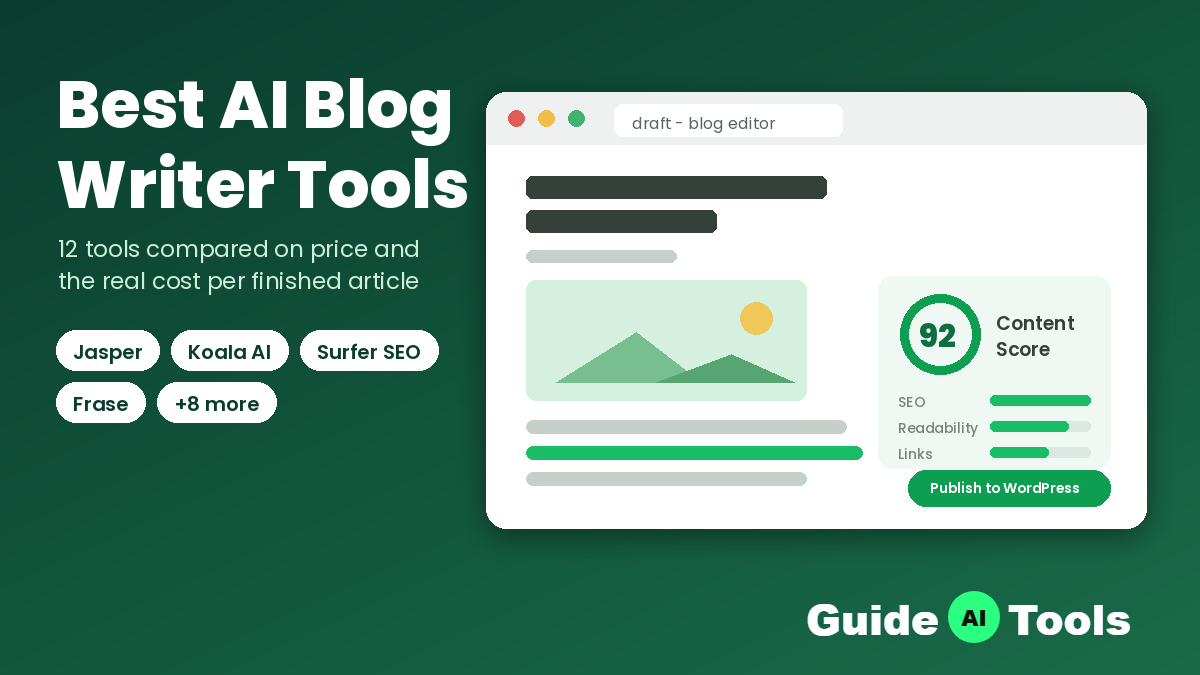
The best AI blog writer depends on the job in front of you. Jasper earns its price when a team needs every post in one brand voice. Koala AI writes researched articles from your own business facts at word-metered prices. Surfer SEO scores the draft against the pages already ranking. And Claude is hard to beat if you edit every line yourself anyway. What the plan pages do not show you is the meter running behind the price: article caps, word limits, words that burn at two or three times the rate on the better models, credits that reset at month end, and the editing hour nobody budgets for.
This guide prices one finished article for all 12 tools, prints the free plan catch next to every free plan, and separates the three jobs these tools mix together: drafting, optimizing and publishing. Every figure comes from the vendor’s own pricing page, verified from official pricing pages. At GuideAITools we track the full field as AI blog writer tools, and the split below decides most purchases.
What Separates an AI Blog Writer From a General Chatbot
A chatbot gives you text. A blog writer is supposed to give you a post that can rank, in your voice, inside your CMS, with the links wired in. That gap is the whole market.
Three jobs hide inside the label. Drafting is the words themselves, and every tool here can do it. Optimizing is the work against the results page: reading what ranks, scoring your draft against it, and naming what the page is missing. Publishing is the last mile, pushing the finished post into WordPress or another CMS on a schedule, with internal linking placed and images sitting in the media library. At GuideAITools we judge every tool in this category against those three jobs, because buyers keep paying for all three and using one.
ChatGPT and Claude do the first job well and stop there. The purpose-built tools charge for the second and third jobs, which is why a 14 dollar plan and a 79 dollar plan can both be honest prices for different products. Judge each tool below against the job you actually need done.
The Best AI Blog Writing Tools, Compared Side by Side
Start with the job, then compare inside it. Every price below is the entry paid tier from the vendor’s official pricing page, with the billing unit spelled out, because a per seat price and a per article price are not the same animal. Every tool in the table is one we track at GuideAITools.
| Tool | Best for | Starting price | Free plan |
|---|---|---|---|
| Jasper | Brand voice for marketing teams | $59 per seat/month billed yearly | 7-day free trial |
| Writesonic | Drafting plus AI search visibility tracking | $79/month billed annually | Free trial |
| Koala AI | Researched articles in your own voice | $20/month billed annually | 5,000 words, one time |
| Surfer SEO | Scoring drafts against the results page | $49/month billed yearly | None |
| Frase | Research, briefs and drafting in one seat | $39/month billed yearly | 7-day free trial |
| SEOWriting AI | Finished articles at the lowest per-article cost | $14/month billed yearly | 3 articles, one time |
| Autoblogging.ai | Bulk publishing on a schedule | $12/month billed annually | 10 credits a month |
| Copy.ai | Go-to-market workflows with drafting inside | $24/month billed annually | None |
| RightBlogger | Solo bloggers who want posts on autopilot | $49/month billed annually | 2,000 words a month |
| ChatGPT | Raw drafting and research help | $20/month for Plus | Usage-capped free plan |
| Claude | Long, clean first drafts | $17/month billed annually | Usage-capped free plan |
| Rytr | The cheapest drafting that still works | $9/month | 10,000 characters a month |
Two patterns show up fast. The volume tools sell finished articles and meter them hard. The assistants sell a flat seat and meter nothing but your time. Everything in the middle is a mix, and the mix is where buyers get surprised, usually in the second month, when a cap or a reset shows up on the invoice.
AI Blog Writer for SEO: Tools That Score the Draft
Drafting is the easy half. Ranking is the other half, and it starts with reading the results page you want to enter, featured snippets and all. These three tools build the draft around that page, and the wider field sits in our AI SEO assistant category for readers comparing optimizers on their own.
Surfer SEO, the optimizer with a writer attached

Surfer is an optimizer first, and the article should say so plainly. Its Content Score grades your draft against the pages ranking now, across terms, headings, word count and internal links, and a plagiarism check sits in the same panel. The AI Writing Assistant, which Surfer calls Surfy, drafts inside that frame, so the score is not an afterthought bolted onto finished text. That is content optimization with the writer inside it. Plans run from 49 dollars a month billed yearly for the entry tier, through 99 and 182 dollars, to 299 dollars at the top, metered in documents rather than articles.
AI Search Analytics, the brand tracking across ChatGPT, Perplexity and Google AI answers, sells separately from 82 dollars a month.
The honest weakness: Surfer will happily help you match the results page, and matching the results page is not the same as beating it. The tracking is closer to rank tracking for AI answers than to the old keyword reports, useful, but the writing still needs a point of view the SERP does not already have.
Frase, research and briefs before the draft
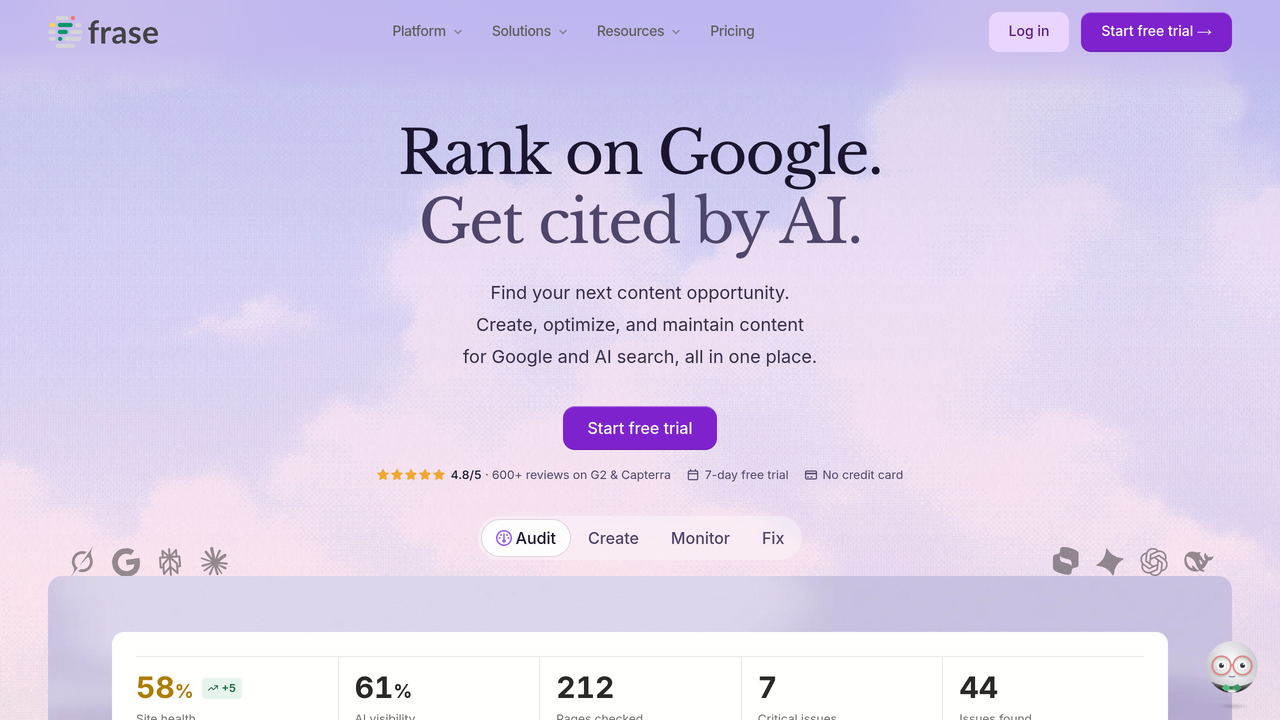
Frase starts one step earlier, with the SEO content brief. It pulls the ranking pages for your keyword and turns them into a working brief: outline generation, the heading structure of the pages already ranking, and the questions the page has to answer for the search intent behind the query. Then it drafts against its own research. Its Content Guard feature keeps watching published pages after they ship, a form of rank tracking most writers never set up.
Starter costs 39 dollars a month billed yearly and covers 10 articles and one seat. Professional at 103 dollars raises that to 40 articles and three seats, Scale at 239 dollars covers 100 articles, and extra seats cost 29 dollars each. The 7-day free trial carries the Professional feature set with a cap of 5 articles, enough to judge the brief quality. Watch the meter on the middle tiers: pay-as-you-go overages exist, off by default, at 5 dollars per extra article on Professional. Turn them on by accident and the cheap seat gets loud.
Writesonic, the writer that became a visibility platform

Writesonic started as an article writer and now sells itself as an AI search visibility platform, with the writer inside. The plans still meter articles the old way: Starter at 79 dollars a month billed annually includes 15 AI articles and one user, Basic at 199 dollars covers 25, and Growth at 399 dollars covers 50. Brand mention tracking across ChatGPT, Gemini and Google AI Overviews is bundled into the tiers rather than sold apart. Growth plans can add articles at 100 dollars for 20, and extra users cost 50 dollars a month each on Basic and Growth.
Two cautions. The pricing page promises no rollover for unused articles, so a quiet month is a paid month all the same. And the article writer is no longer the headline product, which matters if your whole reason for paying is the writing.
AI Blog Post Generator Tools Built for Volume
Volume tools sell a different promise: not help writing, but finished long-form posts that arrive on their own. The trade is always the same. You gain speed and lose a layer of control, and the bill arrives as editing time instead of subscription price. Budget 20 to 30 minutes of human work on every one-click article below, fixing facts, links and voice, before you call the per-article math cheap.
Koala AI, researched articles written from your own business facts

KoalaWriter takes a keyword, reads the live Google results, and writes the article inside a knowledge base it builds from your website, which Koala calls Brand DNA. Your services, credentials and service areas go in, and the draft uses them instead of inventing filler. It handles product roundups with live product data, builds topical clusters around a pillar post, and publishes in one click to WordPress, Shopify, Webflow or Ghost. You pick the keyword, the model, the language, the target country and the tone of voice, review the outline if you want to, and generate.
The meter is words. The free allowance is 5,000 words once, not monthly, with no credit card. Starter costs 25 dollars a month, or 20 dollars billed annually, for 45,000 words. Professional at 49 dollars carries 100,000 words and Boost at 99 dollars carries 250,000. Two rules decide the real price. Unused words roll into a bank capped at three months of allowance, a friendlier policy than most. But the better models burn words faster, at two times the rate for Claude Sonnet and three times for Claude Opus, so a premium draft can cost triple the headline math.
SEOWriting AI, the cheapest finished article in this guide

SEOWriting runs the whole loop itself. It reads Google for the topic, the AI answer, the questions people ask and the pages ranking now, then writes the article with pictures, tables and an FAQ section. Internal linking is wired by meaning across your existing pages, external linking points at the sources behind the facts, and the finished post publishes to WordPress or Shopify on your schedule. Bulk generation takes up to 100 articles in one run from a keyword list.
The free start is 3 articles, once, with a 25,000 word cap across them and no credit card. Starter costs 14 dollars a month billed yearly, or 19 dollars monthly, for up to 50 articles. Professional at 59 dollars covers 250, and the Pro Plus tiers at 119 and 230 dollars reach 500 and 1,000 articles, each up to 5,200 words. At 28 cents per article on Starter, nothing else here is close on raw price. The catch sits in the terms: unused monthly credits do not roll over, on any plan, yearly plans included. Publish in bursts and the cheap plan quietly stops being cheap.
Autoblogging.ai, bulk batches with a fact checker in the loop
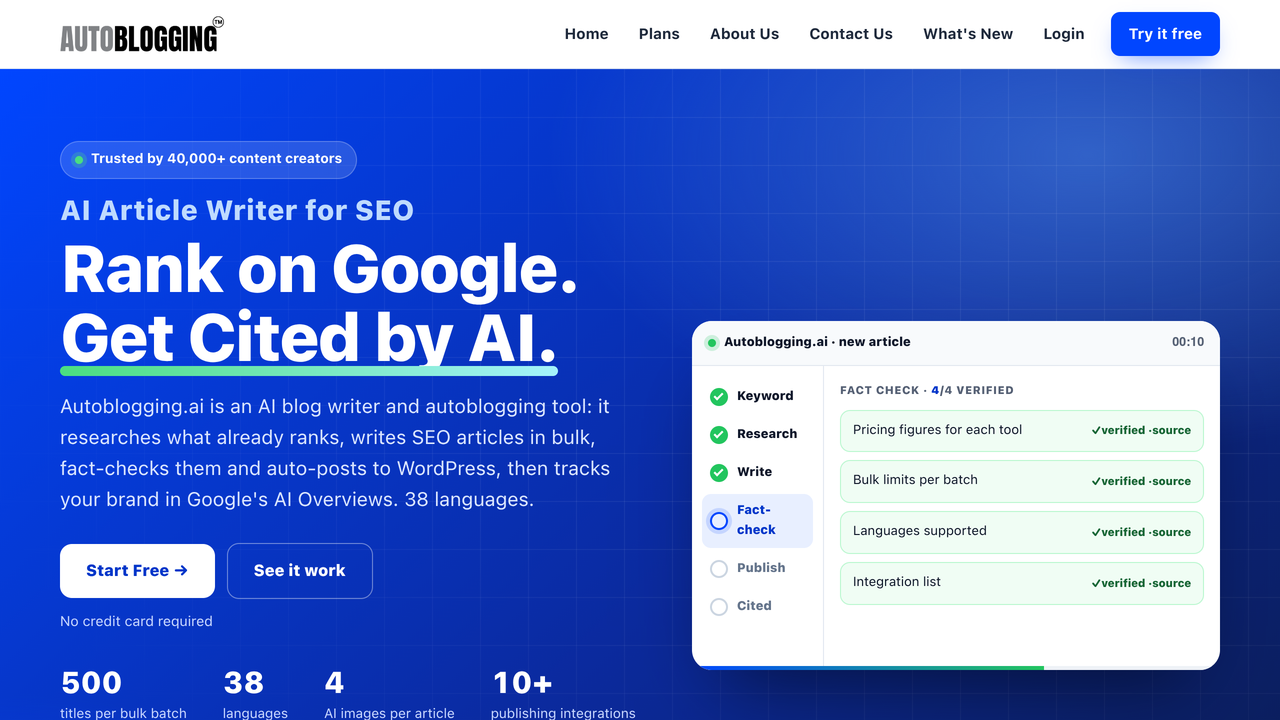
Autoblogging is built for batches: paste up to 500 titles and the platform researches what already ranks, writes the articles, runs a fact checker over the claims and figures, and auto-posts them on a schedule to WordPress, Shopify, Wix, Webflow, Ghost and more. It tracks your brand in Google AI Overviews afterwards, writes in 38 languages, and puts four AI images in each article. New accounts get 10 free credits every month, no credit card required.
Paid plans price by credit. Starter is 19 dollars a month, or 12 dollars billed annually at 148 dollars a year, for 40 credits. Regular at 49 dollars carries 120 credits and Standard at 99 dollars carries 300. A standard article costs 1 credit, and the honest weakness is how fast that grows: SERP analysis, AI images and internal linking add a credit each, its Godlike research mode costs 3, and multilingual content adds one more per article, so a fully loaded post can land at 4 or 5 credits. The saving grace is the rollover. Unused credits carry forward and never expire while the subscription stays active.
Best AI Blog Writers for Brand Voice and Marketing Teams
Teams buy a different thing: consistency. One voice across five writers, approvals that do not live in email threads, and drafts that sound like the company on a bad day as well as a good one. These three sell that control, at team prices.
Jasper, brand voice with a per seat price tag
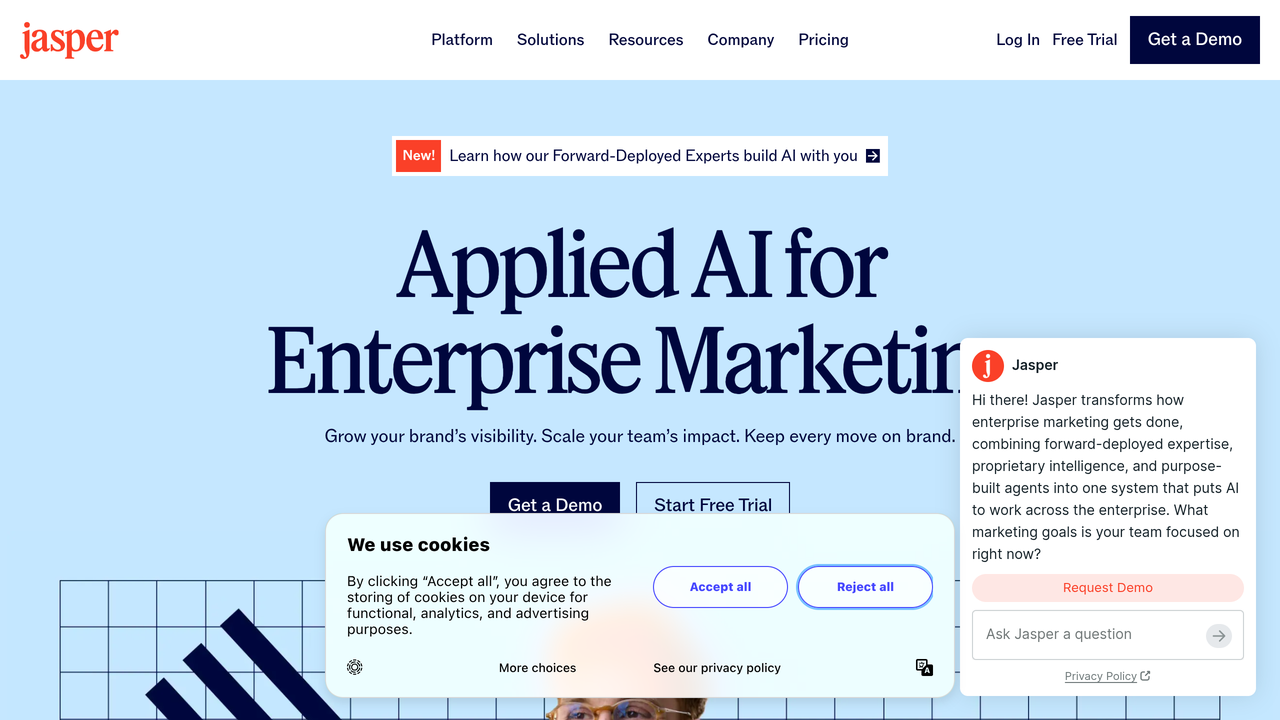
Jasper is the team pick because Brand Voice is its home ground: feed it your style guide and past content, and every writer on the team drafts inside the same voice, with campaigns and shared knowledge around it. Pro costs 59 dollars per seat per month billed yearly, or 69 dollars billed monthly, with a 7-day free trial. Business is a custom quote. There is no free plan and no article cap, which makes Jasper the cleanest meter in this guide and the easiest to misread.
The price is per seat. Five writers cost five times 59 dollars, every month, before anyone writes a word. For a solo blogger that math ends the conversation. For a marketing team already paying for inconsistency in rewrites, it can be the cheapest line in the budget.
Copy.ai, now a go-to-market platform with a writer inside
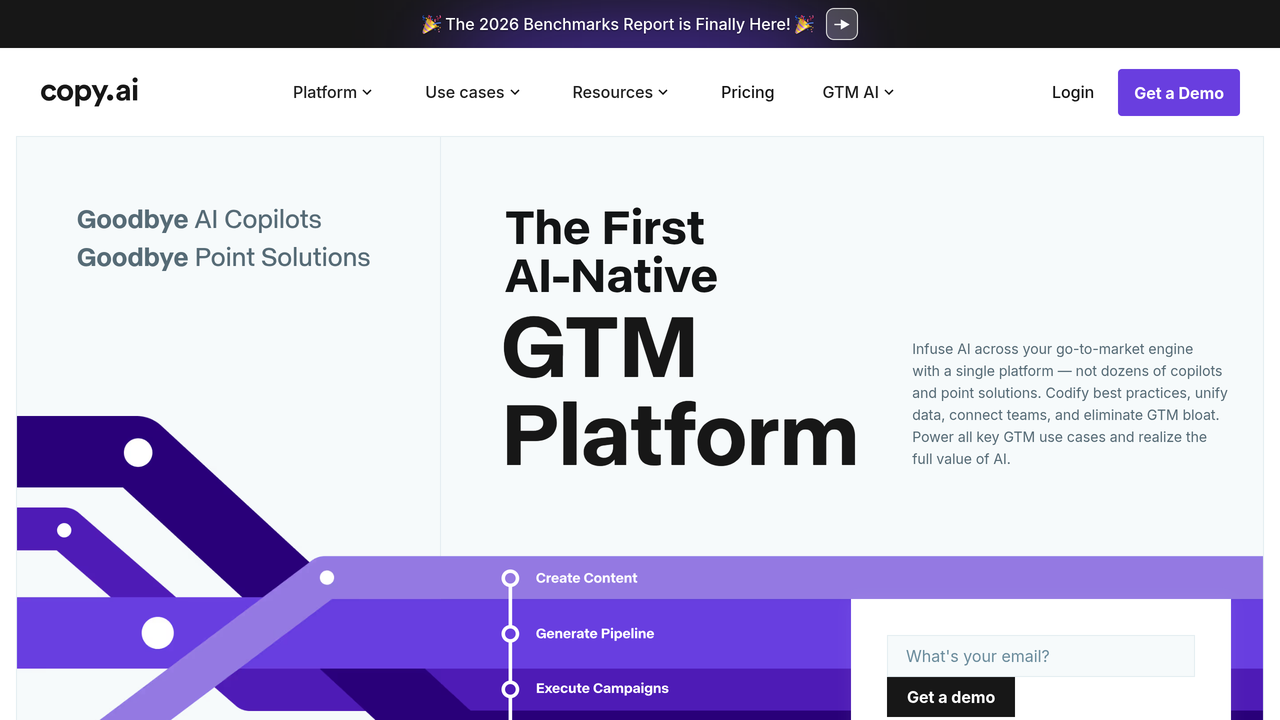
Copy.ai has left the blog writing fight, and its homepage says so: it now sells itself as an AI-native go-to-market platform, one system for the whole revenue engine instead of a shelf of writing tools. Blog drafting survives as one workflow among many.
The entry Chat plan costs 24 dollars a month billed annually, or 29 dollars monthly, and covers five seats with unlimited words in Chat and no workflow credits. The real platform starts at Growth, 1,000 dollars a month with 20,000 workflow credits, then Expansion at 2,000 dollars and Scale at 3,000 dollars. There is no free plan.
If your job is blog posts, you are paying for a platform your job does not use. If your job is the whole go-to-market motion, the writer is a bonus.
RightBlogger, autopilot posting for solo bloggers

RightBlogger is built for one person running one blog seriously. It starts with keyword research, writes posts in a voice it learns from your site, queues them on a content calendar, and publishes to WordPress and a long list of other platforms. The free plan gives 2,000 AI words a month. Solo costs 49 dollars a month billed annually, or 59 dollars monthly, for one site and about one automated post a day, with unlimited AI words. Pro at 69 dollars covers three sites and about three posts a day, and Agency at 199 dollars covers ten sites and ten a day. A 7-day free trial runs across the paid tiers.
What sets it apart is the aftercare: its Site Agent runs a standing content audit on posts already live and proposes fixes for internal links, meta titles, meta descriptions and missing alt text on a schedule. The limits are deliberate ones. Automated posts per day are capped by tier, only 30 scheduled posts can sit in the queue at once, and Solo shares its posts to LinkedIn only.
General AI Assistants, for Writers Who Edit Everything
Half the blogs on the internet now start as a chat window. The assistants write well, research passably and cost a flat fee. What they never do is score the draft, place the links or touch your CMS. You are the workflow, and CMS integration is the dividing line between this group and everything above it.
ChatGPT, the strongest raw drafter, with no publishing layer
ChatGPT is the tool most bloggers already have open. The free tier costs nothing and is usage capped. Go adds light paid access at 8 dollars a month. Plus, the realistic tier for daily drafting, costs 20 dollars a month, billed monthly, with no annual option. Pro tiers run at 100, 200 and 500 dollars a month for people who live in the window. As a drafting partner it is superb: outlines, angles, rewrites and deep research help in one conversation, with your judgment as the quality gate.
The gaps are structural. There is no content score, no brief built from the ranking pages unless you build it by hand, no internal linking pass and no button that puts the post in WordPress. Every one of those steps is yours, every time.
Claude, long drafts with a calmer tone

Claude has a loyal following among bloggers for a simple reason: its first drafts read less like marketing copy. Sentences breathe. The free plan is usage capped, resetting in windows through the day and across the week. Pro costs 17 dollars a month with annual billing, 200 dollars paid up front, or 20 dollars billed monthly. Max at 100 dollars multiplies the usage, and a new Ultra tier at 200 dollars sits above it. Projects give you a standing home for a style guide and source material, the closest thing here to a brand voice feature.
The limits match ChatGPT’s: no SEO scoring, no CMS publishing, and a usage pool shared with everything else you ask it to do. Heavy drafting weeks can hit the ceiling at exactly the wrong moment.
Free AI Blog Writer Options and the Budget Pick
Free plans in this market come in three shapes, and the shape matters more than the word free. Some renew every month. Some are a single allowance that dies when you spend it. Some are a full product with the meter running on your time instead.
Rytr, the cheapest paid drafting that still works
Rytr remains the budget pick on price alone. The free plan renews at 10,000 characters a month across more than 40 writing use cases. Lite at 9 dollars a month removes the character cap entirely, Personal costs 19 dollars and Pro 49 dollars, and yearly billing trims 20 percent. No SEO scoring, no publishing layer, just fast drafting at a price lower than a single outsourced article.
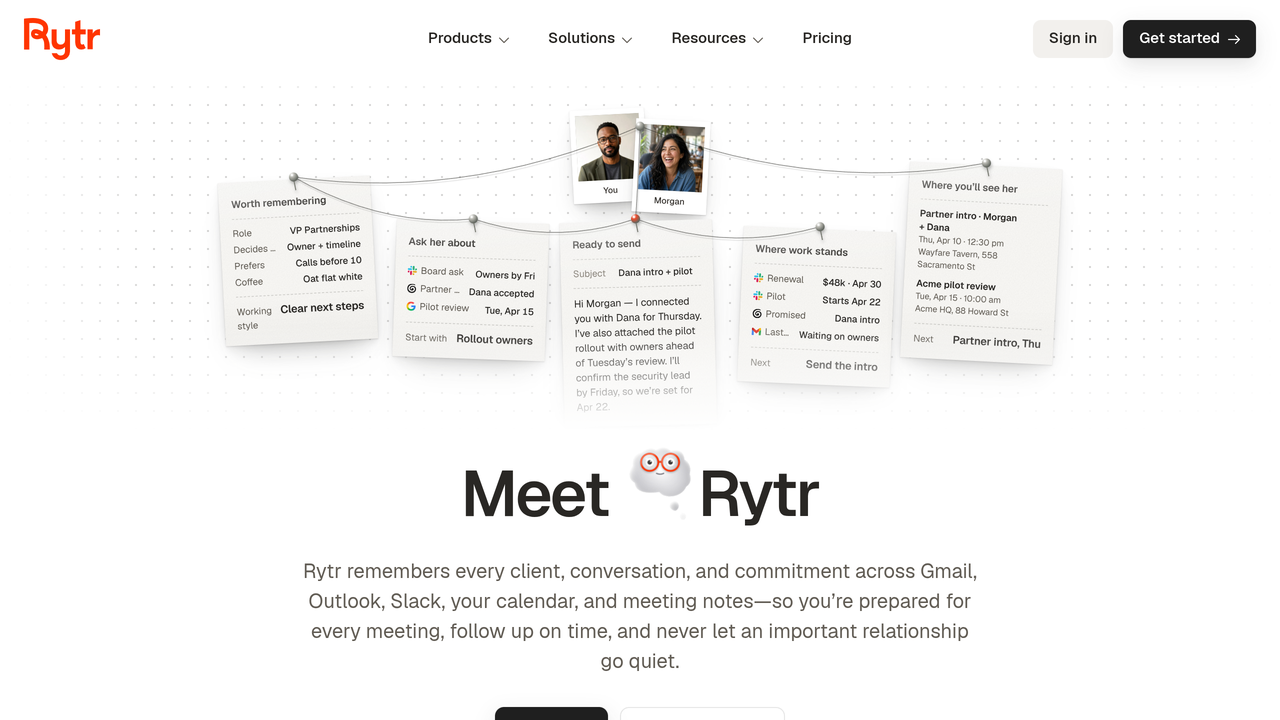
One honest warning, visible on its own homepage: Rytr now leads with a relationship assistant that tracks clients, conversations and follow-ups across your email and calendar. The writing plans are still sold and still cheap, but blog writers are plainly not where the company’s attention sits. Buy it as a drafting tool, not as a platform bet.
Now the catches, side by side. Koala’s 5,000 free words and SEOWriting’s 3 free articles are one-time allowances: generous auditions, not plans. Autoblogging’s 10 free credits, RightBlogger’s 2,000 free words and Rytr’s 10,000 characters renew monthly. ChatGPT and Claude free tiers renew as usage windows rather than word counts, which makes them hard to plan around and easy to exhaust mid-article. A small blog publishing twice a month can genuinely run on the renewing free tiers.
Anything past that is a paid decision, and it should be made on the pricing math below, not on the size of the free sample.
AI Blog Writer Pricing: What One Finished Article Costs
Subscription prices lie politely. The honest unit is one finished article: written, checked and published, with the plan rules applied. Here is the math for the entry tier of every tool, worked from the official pricing pages, article caps, word limits and all, with the credit rollover rule that decides what a quiet month costs you.
| Tool | Plan used | What the plan includes | Cost per finished article | Credit rule |
|---|---|---|---|---|
| Writesonic | Starter, $79/month billed annually | 15 articles a month | $5.27 | No rollover promised |
| Frase | Starter, $39/month billed yearly | 10 articles a month | $3.90 | Monthly allowance, resets |
| Jasper | Pro, $59 per seat/month billed yearly | No article cap | Falls with volume | No article meter |
| RightBlogger | Solo, $49/month billed annually | About 30 automated posts a month | $1.63 | Unlimited words, daily post cap |
| Koala AI | Starter, $20/month billed annually | 45,000 words a month | About $0.83 at 1,500 words a post on the base model | Rolls over, bank capped at 3 months |
| Autoblogging.ai | Starter, $12/month billed annually | 40 credits a month | $0.30 bare, about $1.20 fully loaded | Rolls over while subscribed |
| SEOWriting AI | Starter, $14/month billed yearly | 50 articles a month | $0.28 | No rollover, resets monthly |
| Copy.ai | Chat, $24/month billed annually | Unlimited words in Chat | Flat fee | No article meter |
| Surfer SEO | Entry plan, $49/month billed yearly | Documents for optimizing | Not sold per article | Monthly documents |
| Rytr | Lite, $9/month | Unlimited characters | Your editing time | Nothing to expire |
| ChatGPT | Plus, $20/month | Usage-capped chat | Flat fee | No article meter |
| Claude | Pro, $17/month billed annually | Usage-capped chat | Flat fee | No article meter |
Read the last column before the third. SEOWriting is the cheapest article in this guide and the strictest meter: miss a month and the credits are gone, yearly plan or not. Koala and Autoblogging sit at the other end, banking what you do not use, which suits anyone who publishes in bursts around launches or seasons. Writesonic prints no rollover promise at all, so treat unused articles there as spent.
Then add the cost nobody prints. A one-click article still needs a human pass: checking facts and figures, fixing two or three links, cutting the generic openers, adding the one example only you can add. Call it 20 to 30 minutes. At any sane hourly rate, that editing pass costs more than the 28 cent article it fixes, which is why the cheapest generator is not automatically the cheapest post. Assisted drafting flips the trade: you pay more per month to Jasper or an assistant, and less per article in repair time. Neither answer is wrong. Paying for the wrong one is.
How to Choose the Right AI Blog Writer for Your Blog
Match the tool to the blog, not to the loudest feature list.
Running an affiliate or niche site on volume? Start with SEOWriting or Autoblogging for the per-article math, and keep a hard editing pass in the workflow, because thin posts at scale are exactly what search engines have spent two years learning to ignore. The posts that survive are the ones building topical authority, not filling a calendar. Add Koala if your posts need real business facts in them rather than generic filler.
Writing for a company, with a voice to protect? Jasper if a team shares the work, Claude with a good style guide in Projects if one writer does it all. The per seat price stings once. Off-brand posts sting every week.
Publishing on your own blog, on a schedule you keep missing? RightBlogger’s autopilot and post-publish audits were built for exactly that failure mode. And if your real gap is short copy, ads and product descriptions rather than posts, the wider AI copywriting tools category is the better shelf to shop from. At GuideAITools we see the same pattern across every category we track: the buyers who stay happy picked the tool whose meter matched their publishing rhythm.
FAQs
Do AI-written blog posts rank on Google?
Yes, when the post earns it. Google judges AI generation like any other content: helpful, original and written for people first, with the experience signals it groups under E-E-A-T. The Google guidance on AI-generated content rewards the page, not the production method. What fails is mass-produced thin content with nothing added. AI content detection is a side question next to that. If you want a second opinion on a draft, our AI content detector category covers the checking tools.
Can an AI blog writer publish straight to WordPress?
The volume tools can. Koala, SEOWriting, Autoblogging and RightBlogger all connect to WordPress and publish or schedule posts directly, with images placed in your media library. The assistants cannot: ChatGPT and Claude hand you text, and the trip into your CMS is manual. Frase and Surfer sit between the two, built around optimizing content that lives in your editor and your CMS.
How much does an AI blog writer cost per article?
On entry plans, from 28 cents a finished article on SEOWriting’s Starter to 5.27 dollars on Writesonic’s Starter, before editing time. Word-metered Koala lands near 83 cents for a 1,500 word post on its base model. Flat-fee tools like ChatGPT Plus at 20 dollars a month carry no per-article price at all: the cost is your time. The full math sits in the pricing table above.
Is a free AI blog writer enough for a small blog?
For two posts a month, it can be. The renewing free tiers, Autoblogging’s 10 credits, RightBlogger’s 2,000 words and Rytr’s 10,000 characters, cover light publishing. The one-time allowances, Koala’s 5,000 words and SEOWriting’s 3 articles, are auditions rather than plans. The moment you publish weekly, a paid tier pays for itself in caps you stop hitting.
What is the difference between an AI blog writer and ChatGPT?
ChatGPT drafts. A blog writer runs the workflow around the draft: SERP research before writing, a content score against the ranking pages, internal linking, and publishing into your CMS. If you enjoy editing and already run an SEO process, ChatGPT plus your own checklist covers most of it for 20 dollars a month. If the process is the thing you keep skipping, the purpose-built tools are selling you the process.
How much editing does an AI draft need before publishing?
Budget 20 to 30 minutes for a one-click article: verify the facts and figures, fix the links, cut the filler sentences, and add one specific example or opinion the model could not invent. Assisted drafts from an assistant you briefed well need less, often 10 minutes of tightening. A draft that needs no editing at all is usually a draft that says nothing new.
Which AI blog writer is best for affiliate sites?
On math, SEOWriting and Autoblogging: low per-article cost, bulk generation and direct publishing. On quality control, Koala, because its articles carry real product and business facts from your knowledge base instead of invented specs, and invented specs are poison in a review. Whichever you pick, the human pass on prices and claims is not optional in affiliate content.
Conclusion
The decision is simpler than the marketing makes it look. Pick the tool whose meter matches your rhythm: per article if you publish in bursts and need rollover, per word if your posts carry real facts, per seat if a team shares one voice, flat fee if you edit everything yourself anyway. Then protect the one step no tool sells you, the human pass that turns a draft into something worth ranking.
Start with one tool, one month and ten posts. Measure what you actually publish, not what the plan allows. And when you are ready to compare the wider field, the best AI tools for content creators roundup at GuideAITools is the next read.

Related Blog Posts