What Is Artificial Superintelligence (ASI)?
Artificial superintelligence, or ASI, is a hypothetical AI that would out-think the best human experts at nearly every mental task at once: science, strategy, invention, and social judgment. The term comes from research, not from any product page. No such system exists today.
A calculator beats you at arithmetic. A chess engine beats every grandmaster alive. Neither one is superintelligent, and the reason why is the whole topic of this page.
Superintelligence is the shorter name for the same idea. At GuideAITools, we give each big term its own page, because few words in tech get stretched as hard as this one.
Below: the meaning, the ladder, and the three forms it could take. Then what would have to be true for it to exist, and how to judge the next headline that claims it has arrived.
What Artificial Superintelligence Means
Philosopher Nick Bostrom gave the term its modern definition in his 2014 book Superintelligence. He defined a superintelligence as “any intellect that greatly exceeds the cognitive performance of humans in virtually all domains of interest.”
Read that slowly, because two parts do the heavy lifting. “Greatly exceeds” does not mean a nose ahead. It means far past.
And “virtually all domains” makes breadth part of the definition itself, so one brilliant skill never qualifies on its own.
The bar is the best human in every field, beaten at once. Not the average person, not a casual chess player. The strongest expert in each domain, all of them, at the same time.
The idea is older than the word. Mathematician I.J. Good described an “ultraintelligent machine” back in 1965, and Bostrom later gave the concept its modern definition and its fullest treatment. Hold it against what artificial intelligence is today: tools that do narrow jobs, sometimes brilliantly, and stumble outside them.
The status is plain: ASI is a hypothetical concept. No lab has built one, and no test has measured one. Every claim you will read about it is a definition, a forecast, or an argument.
Where ASI Sits: Narrow AI, AGI, Then ASI
Narrow AI is the only step on this ladder that exists. It does one task or a tight family of tasks, and at that one thing it can beat every human alive. Chess engines, AlphaFold, and the system that picks your next video all live here, and all of them are helpless outside their lane.
Next would come artificial general intelligence, or AGI. An AGI would match skilled humans across most intellectual tasks and learn new ones without being rebuilt for each. Nobody has built one that experts accept, which is why GuideAITools keeps a separate page for this step.
ASI sits above that. It would not just match the best humans across nearly every domain. It would pass them, all at once.
How wide is the gap between AGI and ASI? Nobody knows. Guesses run from a short step to a leap nobody can picture.
Treat the ladder as a map, not a schedule. The steps were drawn by writers to organize a debate. Reaching one step does not promise the next.
| Level | What it means | Example | Status |
|---|---|---|---|
| Narrow AI (ANI) | One task or a narrow family of tasks, sometimes better than any human | Chess engines, AlphaFold, recommendation systems | Exists today |
| AGI | Matches skilled humans across most intellectual tasks and can learn new ones | None accepted | Hypothetical, an active research goal |
| ASI | Exceeds the best humans across practically every domain at once | None | Hypothetical, no agreed path |
Three Ways a Mind Could Be Super
Bostrom split superintelligence into three forms, and separating them clears up most confusion around the word. A system could be super in speed, in scale, or in quality of thought.
Speed superintelligence is a human-quality mind running far faster. Bostrom’s comparison: biological neurons fire at a peak of about 200 times per second. A modern processor runs billions of cycles per second.
Run a mind on faster hardware and you get a year of careful thought, finished in an afternoon.
Collective superintelligence works by numbers instead of speed. Picture a research department of thousands that never sleeps, never forgets, and shares one memory.
No single member needs to be a genius. The whole outperforms any human team because the parts coordinate perfectly.
Quality superintelligence is the strangest form. Not faster, not bigger, just better at thinking itself: forming the right questions, seeing moves that humans cannot see at all. Think of the gap between a strong chess player and the person who invents a new way to play chess.
Here is the honest close. Today’s AI already hints at speed and scale inside narrow tasks. For quality superintelligence, there is no working example at all.
What Would Have to Be True for ASI to Exist
Most arguments about ASI are really arguments about the bar. So here is the bar, stated as five conditions that would all have to hold at once:
- It beats the best humans, not average users or beginners.
- It does so across practically every domain, not one benchmark family.
- It learns genuinely new domains without being rebuilt for each one.
- It improves itself, or designs successors better than itself.
- Independent evaluators can confirm all of this on problems it has never seen.
A system that tops one leaderboard clears part of condition two and nothing else. The other four conditions are where claims quietly die.
There is also a measurement problem hiding underneath. How do you set an exam for a mind smarter than the examiners?
Benchmarks are narrow, pre-written tasks. A system can ace one and still fall apart on open-ended work.
Look at the real profile of today’s best models. According to Stanford’s 2026 AI Index, frontier models now match or beat human baselines on some PhD-level science questions. Yet the top model in its clock-reading test read analog clocks right only about half the time, and multi-step planning remains a weakness.
The same models produce AI hallucinations, confident answers that are simply made up. That jagged profile is the opposite of the definition above.
Two big labs now carry the word in a company or division name. A name on a building is not a measurement. At GuideAITools, we run every superintelligence headline through five questions:
- Which definition is being used?
- Compared to whom, average users or the best experts?
- Who measured it, the maker or an outsider?
- Does it hold on problems the system has never seen?
- Can its makers show that it does what they intend?
A claim that fails most of these is marketing or policy language. It is not evidence.
How Researchers Think ASI Could Emerge
The dullest route is also the one with the most money behind it: keep scaling. More compute, more data, better designs, carried further along the same curve. Whether that curve keeps rising or flattens out is the argument underneath almost every other in this field.
The famous route is recursive self-improvement. A system good enough to improve its own design could improve the improver, and the loop Good described in 1965 begins: an intelligence explosion. This is a hypothesis, not a roadmap.
Its critics answer in the same breath: bottlenecks, diminishing returns, and a physical world that does not care about your curve. A narrow shadow of the loop already exists in AI in software development, where models write and check code that helps build the next models.
A related route is AI research automation. Systems could take over real parts of AI research itself: designing experiments, writing training code. Progress would then compound in ways human-paced research cannot match.
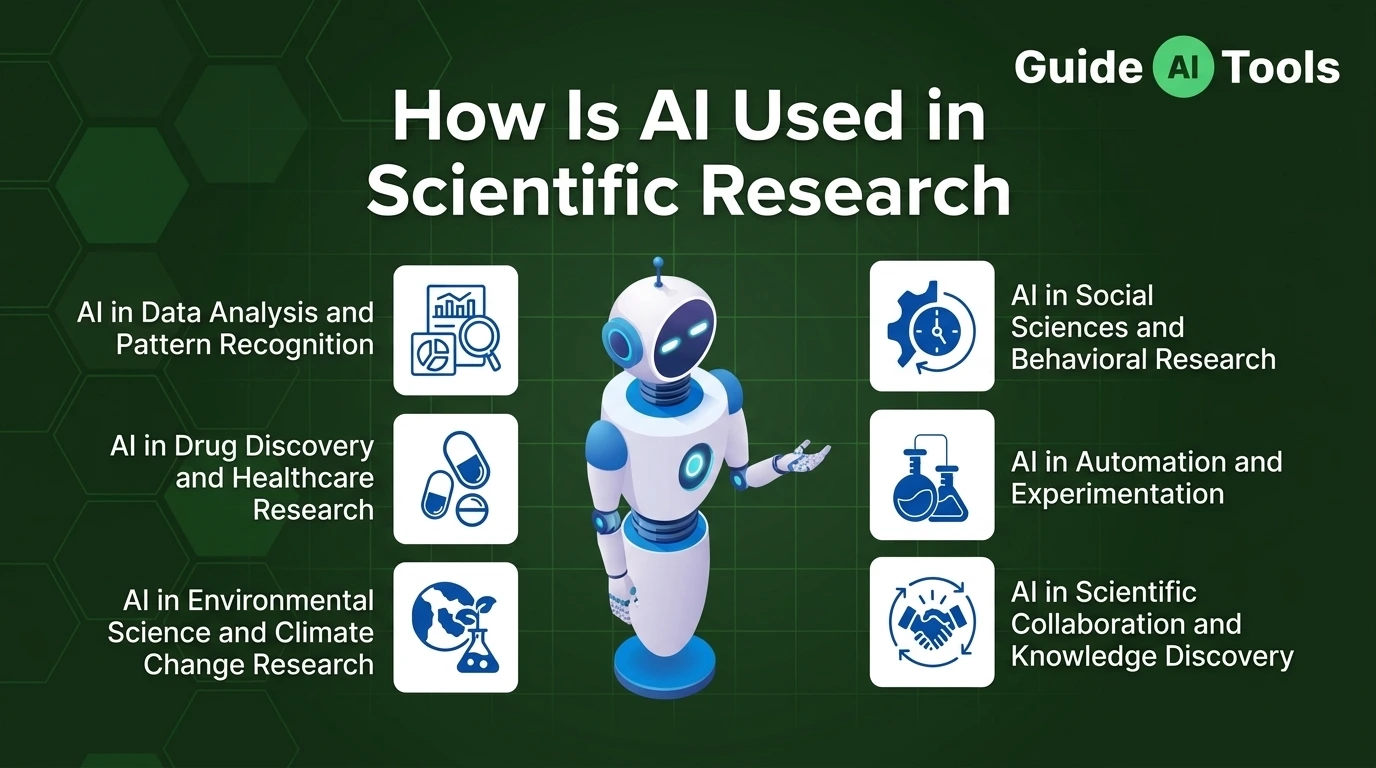
Lab leaders cite this version of Good’s argument most often now. The same pattern shows up in AI in scientific research, where models already screen compounds and propose experiments for human teams to run.
Other routes get less attention and less money. Collections of AI agents dividing a problem and checking each other’s work might add up to more than any single system. Whole brain emulation, copying a human brain into software in full detail, sits at the far edge of the map.
ASI Is Not the Singularity
These two terms get glued together, and they should not be. ASI names a level of intelligence, while the singularity names a period when change becomes too fast to predict or steer. One could in principle arrive without the other, and mixing them up makes every timeline sound more dramatic than it is.
When Will Artificial Superintelligence Arrive?
Nobody knows. The honest range runs from a few years to never, and most forecasts disagree because they quietly answer different questions. When GuideAITools repeats a forecast, we name the milestone next to the date, and this table shows why:
| Source | What was actually asked or claimed | Figure or date | How to read it |
|---|---|---|---|
| Expert survey reported by AI Impacts (2022) | High-level machine intelligence: unaided machines doing every task better and more cheaply than human workers | Aggregate forecast put the 50 percent chance at 2059 | A milestone near ASI, not an ASI date |
| Survey of 2,778 AI researchers (2023, Journal of Artificial Intelligence Research) | Unaided machines outperforming humans at every possible task | 50 percent chance by 2047 | Moved 13 years earlier than the same team’s survey one year before, which shows how unstable these numbers are |
| Metaculus community forecast | AGI arrival | Median around 2033 | A community forecast about AGI, not ASI, whatever headlines do with it |
| OpenAI leadership (2023 governance post) | Superintelligence itself | Could arrive within less than 10 years, in their view | A claim by people building the technology, published to argue for governance, not a measurement |
| I.J. Good (1965) | The first ultraintelligent machine | More probable than not within the twentieth century | It did not happen. This row is the cheapest timeline education on the page |
Read the last row twice. Good was a serious mathematician, and his confident forecast missed by a century and counting. Before repeating any date, ask which milestone it belongs to.
Why Researchers Take ASI Seriously, and Why Others Doubt It
The serious case starts with a simple conditional. If a system ever out-thought its makers at everything, two problems would follow at once. The alignment problem: its goals would have to match human intent, and a much smarter system pursues a badly specified goal in ways nobody foresaw.
The field of AI alignment exists to work on exactly that match. The control problem is blunter. You cannot easily supervise work you cannot do yourself.
And Bostrom’s orthogonality point, in plain words: being very smart says nothing about wanting what we want. Our overview of the risks of AI walks through these failure modes in more depth.
The hope on the other side of the race is real too. The benefits of AI already appearing in medicine and science are the honest reason many researchers want capability to keep growing.
Now the doubt, at full weight. Intelligence may not be one dial that turns past human and keeps going. It may be a bundle of separate tricks.
Physical limits bite as well: chips, energy, and experiments that take calendar time no matter how smart the planner is. Even the definition is unsettled. One IBM researcher in this debate put it this way: ask six computer scientists what superintelligence means and you will get twelve answers.
Princeton researchers Arvind Narayanan and Sayash Kapoor argue AI may spread the way electricity did. Slowly, through institutions, with no single superintelligence moment at all. The skeptics add that today’s harms need no speculation: AI bias in hiring and lending tools is a present problem, not a future one.
Both camps are really arguing about how intelligence works and how fast methods improve. Honest uncertainty is a reasonable place to land.
FAQs
What does ASI stand for?
ASI stands for artificial superintelligence. It is the short form researchers and labs use for a hypothetical AI that would beat the best humans at nearly every mental task.
Does artificial superintelligence exist today?
No. No system meets the definition, and no claim of one has held up under outside checking. What exists is narrow AI, superhuman at one task and lost outside it.
What is the difference between AGI and ASI?
AGI would match skilled humans across most intellectual tasks. ASI would go far past the best humans across nearly all of them. AGI is the step people argue about, and ASI is the level beyond it.
What is an intelligence explosion?
It is I.J. Good’s 1965 idea: a machine able to design better machines could improve itself in a runaway loop, leaving human intelligence far behind. It has been a hypothesis for sixty years, not an observation.
Who came up with the idea of superintelligence?
I.J. Good described an ultraintelligent machine in 1965. Nick Bostrom gave superintelligence its modern definition and its fullest treatment in his 2014 book Superintelligence.
When will artificial superintelligence be created?
Nobody knows. Expert surveys point decades out for milestones near it, and some lab leaders say under ten years. Serious skeptics say the framing itself may be wrong, and every date is a guess with a name attached.
Is artificial superintelligence dangerous?
In theory it could be, if its goals clashed with human intent and nobody could correct it. That risk is argued about precisely because the system is hypothetical. For today’s systems, see our page asking is AI safe.
Is ChatGPT a superintelligence?
No. ChatGPT is a general-purpose chatbot, strong across many tasks and weak in surprising places. It does not beat the best human experts across nearly every domain, and that breadth is the bar the definition sets.
Conclusion
Artificial superintelligence means a mind that beats the best humans at nearly everything, and nothing built today qualifies. That is the whole definition, and it is enough to work with.
So here is the decision this page asks for. Next time a headline announces that superintelligence has arrived, or is months away, run the claim through the five questions above before repeating it. Most will not survive question two.
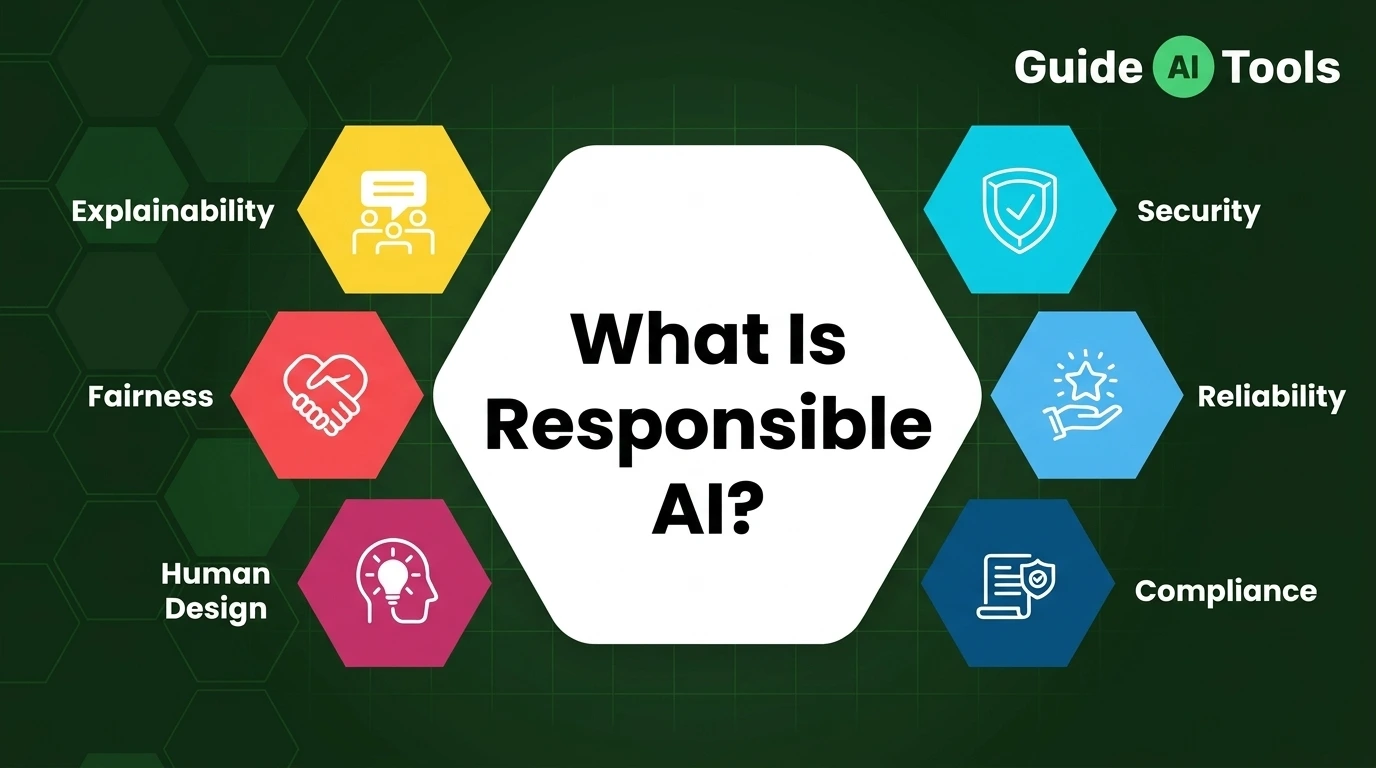
And if you want the practical side of the debate, our guide to responsible AI covers what builders and buyers can actually do right now. That is the standard we will keep using at GuideAITools.

Related Blog Posts