What Are the Benefits of Artificial Intelligence (AI)?
The main benefits of artificial intelligence are simple to recognize: it can automate repetitive work, process huge amounts of information, help people make faster decisions, personalize services and assist with tasks that would otherwise take hours. AI can also improve accessibility, support scientific research and reduce human exposure to dangerous work.
But there is a catch.
AI is useful when the technology fits the task. Put the wrong model into the wrong workflow and the promised time savings can quickly turn into extra checking, corrections and frustration.
That distinction gets lost in most discussions about the benefits of AI.
What Are the Main Benefits of Artificial Intelligence?
Artificial intelligence can help people complete certain tasks faster, analyze information at a larger scale and make better use of data that already exists.
Its value isn’t limited to one industry either.
| AI Benefit | What It Can Improve | Simple Example |
|---|---|---|
| Automation | Repetitive work | Sorting support tickets |
| Productivity | Output and task speed | Drafting routine reports |
| Data analysis | Pattern detection | Finding unusual transactions |
| Decision support | Forecasting and recommendations | Predicting product demand |
| Consistency | Repeatable processes | Product quality inspection |
| 24/7 availability | Continuous monitoring or support | Customer service chatbot |
| Personalization | Tailored experiences | Product recommendations |
| Accessibility | Communication and access | Speech-to-text captions |
| Risk reduction | Dangerous work | Industrial inspection |
| Research | Large-scale analysis | Drug or materials research |
You can think of these benefits as outcomes rather than features.
Pattern recognition is a capability. Detecting suspicious payments is a use case. Finding fraud sooner is the actual benefit.
That difference matters.
1. AI Can Automate Repetitive Work
One of AI’s most practical benefits is reducing the amount of repetitive work a person has to handle manually.
Think about thousands of support messages arriving every week. Someone could read each message and decide whether it belongs to billing, technical support, refunds or account management.
Or a model could classify them first.
Similar systems can help with document extraction, invoice processing, manufacturing inspection, email categorization and routine data handling.
But not every automated process needs artificial intelligence.
Traditional software works perfectly well when the rule is fixed. If every invoice over a certain amount must be sent for approval, a basic rule can handle that.
AI becomes more useful when the system needs to interpret language, recognize an image, predict an outcome or classify information that doesn’t follow one exact rule.
The bigger benefit isn’t always replacing someone’s job. Often, it is giving people less repetitive work to spend time on.
2. AI Can Improve Productivity
Productivity is probably the most discussed advantage of AI, and also one of the most exaggerated.
Research shows real gains. It also shows those gains aren’t equal for every task.
A widely cited study involving more than 5,000 customer support agents found that workers using a generative AI assistant increased the number of issues they resolved per hour by about 14% on average.
The effect wasn’t evenly distributed.
Less-experienced workers saw much larger gains than stronger, more experienced workers. That suggests the system wasn’t simply making everyone type faster. It appeared to help newer workers adopt patterns that experienced workers had already learned.
Other studies summarized in the Stanford AI Index 2026 found measurable productivity gains in customer support, software development and marketing tasks, although the results varied significantly depending on the type of work.
But another study involving experienced open-source developers found something very different. Participants completed the tested coding work more slowly when using AI assistance.
Same broad technology. Very different result.
That is why statements such as “AI makes workers 30% more productive” should make you suspicious.
The better question is:
Productive at what task, for which worker, with what model, and how much checking is required afterward?
When those pieces fit, the productivity benefit can be substantial.
3. AI Can Analyze More Data Than a Person Could Manually
Humans are good at judgment.
We’re not particularly good at reviewing millions of rows, images, transactions or sensor readings one by one.
AI systems can repeatedly scan huge volumes of information for patterns that would be difficult to spot manually.
A fraud system might flag transactions that behave differently from a customer’s normal spending. A factory might analyze equipment readings for early signs of failure. A company might examine thousands of customer reviews to identify recurring complaints.
Medical imaging is another example. Computer vision systems can assist specialists by detecting patterns in images and drawing attention to cases that may need closer review.
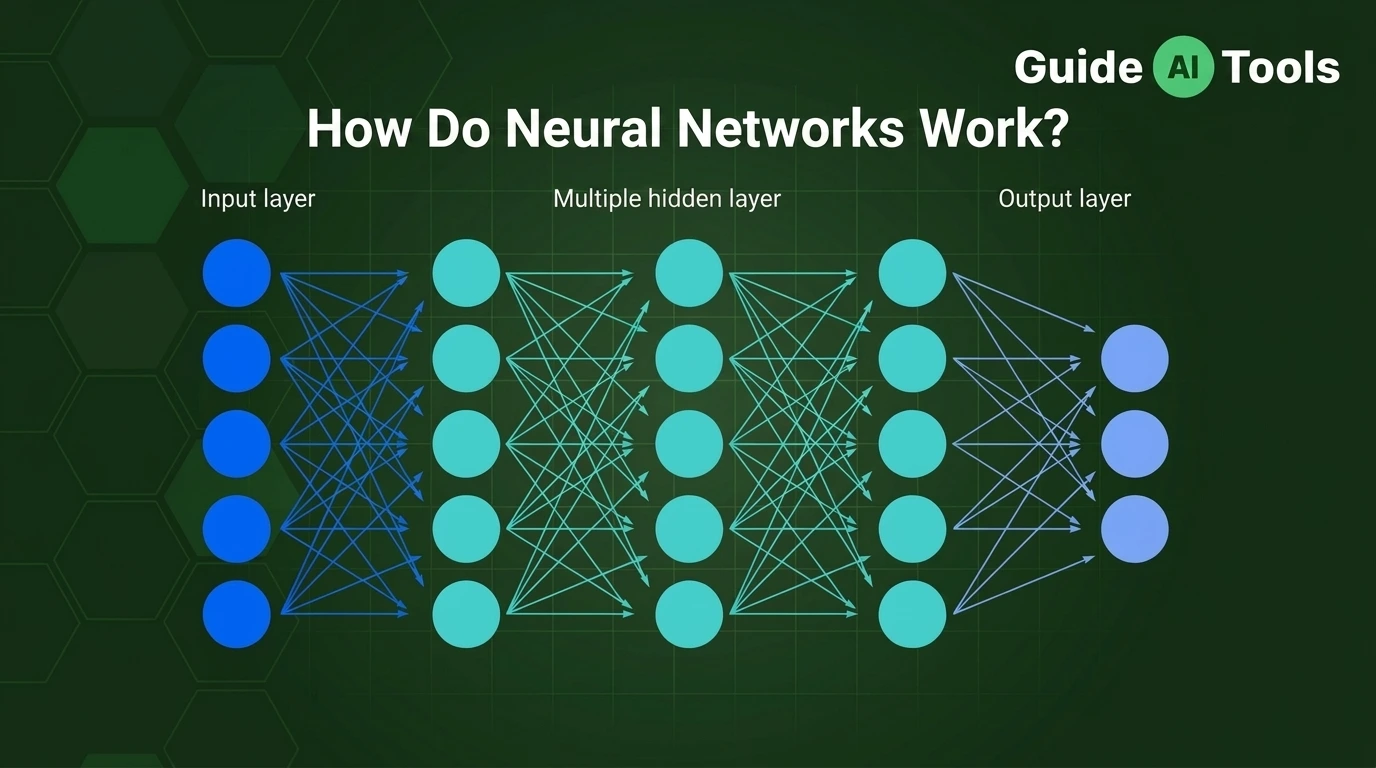
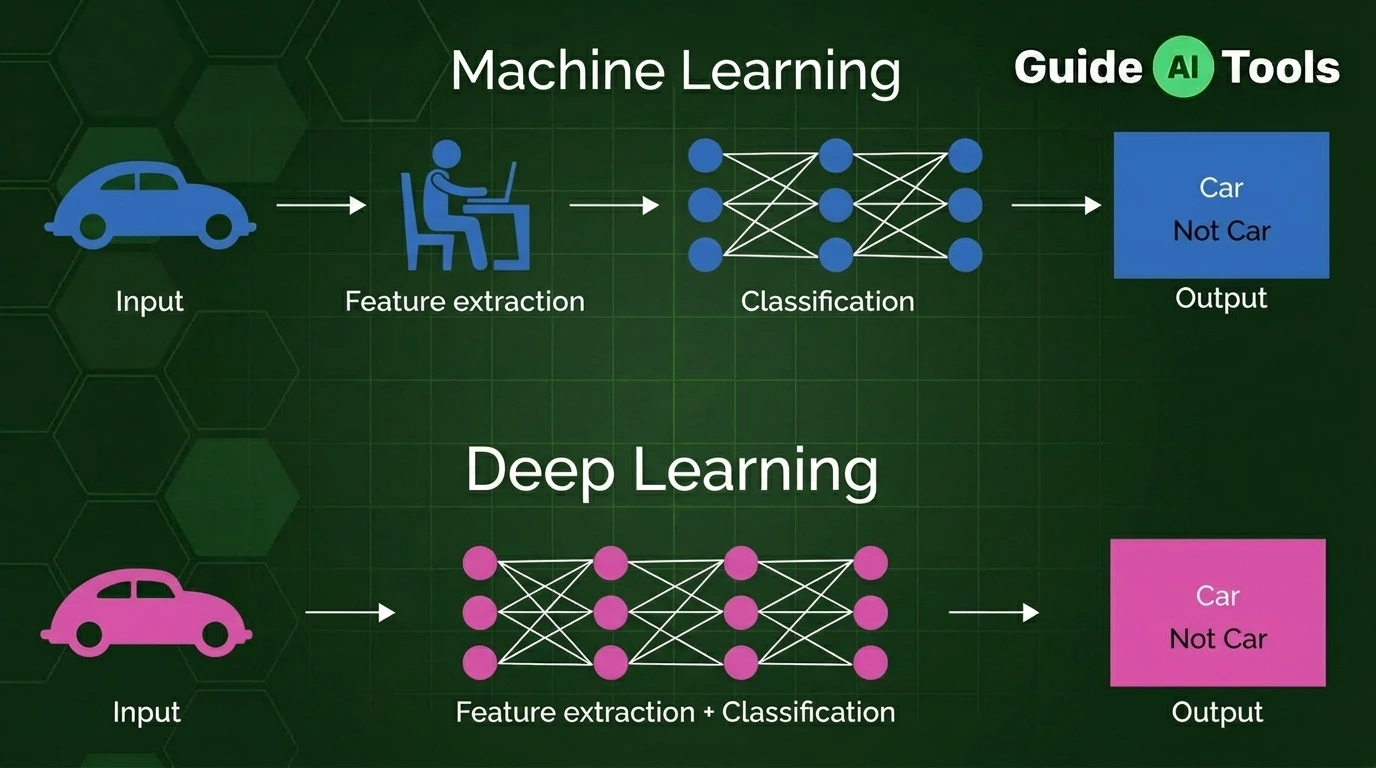
This is closely connected to machine learning, where models learn patterns from data rather than relying only on fixed instructions.
Still, finding a pattern isn’t the same as understanding why it matters.
A model can tell you something looks unusual. A person may still need to decide what to do about it.
4. AI Can Support Faster, Data-Informed Decisions
AI can help people make decisions by turning large amounts of information into predictions, rankings, alerts or recommendations.
Notice the wording.
It supports decisions.
That is different from assuming the machine should always make the final call.
A retailer might analyze past sales, seasonal trends and other signals to estimate how much stock it will need next month. A maintenance team might use sensor data to predict which machine needs inspection first.
Financial systems can flag transactions for review. Logistics teams can compare possible routes. Sales teams can estimate which opportunities deserve attention.
These systems are especially useful when many variables need to be considered at once.
But predictions are still predictions.
A forecast can be wrong. Data can be incomplete. A model can learn a pattern that stops being useful when conditions change.
AI gives decision-makers another source of information. It doesn’t remove the need for judgment.
5. AI Can Reduce Some Types of Human Error
Repetitive work makes people tired.
And tired people make mistakes.
AI can help reduce certain errors when a task requires the same type of check hundreds or thousands of times.
A visual inspection system can scan products for visible defects. Software can flag unusual values in financial records. A document system can check whether required fields are missing.
Consistency is the benefit here.
The model doesn’t become bored halfway through the afternoon.
But saying AI “eliminates human error” goes too far.
It introduces different kinds of mistakes.
A model can classify something incorrectly, miss an unusual case or produce information that sounds convincing but isn’t true. Poor training data can also produce poor predictions.
So the realistic advantage is reducing some repetitive human mistakes while creating a different set of errors that still need monitoring.
6. AI Can Provide 24/7 Support and Monitoring
Software doesn’t need a night shift.
An AI system can monitor transactions, answer basic customer questions or analyze equipment readings long after the office has closed.
That makes continuous availability useful for customer support, cybersecurity, fraud monitoring, production systems and other time-sensitive tasks.
A chatbot, for example, may handle a simple password-reset question at 2 a.m. instead of making the customer wait until morning.
Monitoring systems can also flag suspicious activity the moment it appears.
But availability and reliability are different things.
AI doesn’t get sleepy. It can still get things wrong.
For higher-risk situations, round-the-clock automation often works best when there is also a clear path to human review.
7. AI Can Personalize Experiences at Scale
Traditional personalization is fairly broad.
A company might show one offer to new customers and another to existing customers.
AI can work with far more signals.
Recommendation systems can look at viewing history, previous purchases, search behavior or similar patterns to decide what content might be useful next.
That is why streaming platforms can recommend films, online stores can suggest related products and learning platforms can adjust material based on a student’s progress.
Search can become more personalized too.
A person looking for beginner information may need a very different answer from an expert asking a similar question.
The benefit is relevance.
Instead of giving every person exactly the same experience, systems can adapt parts of that experience based on available context.
Of course, personalization depends on data. The way that data is collected and used creates privacy questions of its own.
That deserves separate treatment rather than being hidden behind the word “personalized.”
8. AI Can Make Technology More Accessible
Some of AI’s most useful benefits have nothing to do with corporate productivity.
Accessibility tools are a good example.
Speech recognition can create live captions. Text-to-speech software can read written content aloud. Translation systems can help people communicate across languages.
Computer vision can help describe visual information. Language models can rewrite dense material in simpler language.
These features can remove friction for people with hearing, visual, language or learning barriers.
Natural language processing plays a major role in many language-based systems, while computer vision helps software interpret images and video.
The benefit isn’t that AI makes a product “smarter.”
It is that more people can use it.
9. AI Can Help People Learn and Access Expertise Faster
One benefit that deserves more attention is knowledge transfer.
An experienced employee may know dozens of small tricks that help them solve a problem faster. A new employee doesn’t have that experience yet.
AI assistance can sometimes narrow that gap.
The customer support research mentioned earlier found particularly large productivity improvements among less-experienced workers. One possible explanation is that the system helped those workers follow patterns closer to those used by stronger performers.
You can see the same basic idea in tutoring, programming assistance, writing feedback and workplace search.
Someone doesn’t have to know the exact technical term before asking a question.
They can describe the problem naturally and get a useful starting point.
That doesn’t make expertise unnecessary.
A beginner may actually be worse at spotting a confident but incorrect response.
Still, lowering the cost of getting a first explanation, draft or example can make learning considerably faster.
10. AI Can Help With Dangerous or Difficult Work
Some jobs are risky simply because of where they happen.
Deep water. High heat. Toxic materials. Unstable structures.
AI can work with robotics, cameras and sensors to reduce the amount of time people spend in those environments.
Industrial robots may inspect dangerous areas. Drones can help assess damage after a disaster. Remote systems can inspect infrastructure in places that are difficult or unsafe to reach.
Space exploration offers similar examples.
A machine can collect information in environments where sending a person would be expensive, difficult or impossible.
This is usually not AI working alone.
The system may combine robotics, sensors, how AI works, computer vision and human control.
The benefit is straightforward.
When a machine can take on the dangerous part, a person doesn’t have to.
How Does AI Benefit Businesses?
For businesses, AI is useful when it improves a process people already care about.
That might mean handling customer requests faster, finding patterns in financial data or giving developers help with repetitive coding tasks.
| Business Area | Possible AI Benefit |
|---|---|
| Customer service | Faster ticket handling and response assistance |
| Marketing | Content support and customer analysis |
| Sales | Lead prioritization and forecasting |
| Finance | Fraud detection and document processing |
| Operations | Scheduling and demand forecasting |
| HR | Administrative assistance |
| Software development | Coding, debugging and testing support |
| Analytics | Faster pattern discovery |
Cost reduction is possible, but it isn’t automatic.
AI software costs money. Integration takes time. Employees may need training. Outputs may need review, and higher-risk uses often require monitoring.
So the useful question isn’t “Can we use AI here?”
Ask:
Will this process become measurably faster, cheaper, safer or better after the full cost of using the system is included?
That question filters out a lot of bad AI projects very quickly.
How Can AI Benefit Science and Society?
AI can help researchers work through scientific information that is too large or complex to analyze manually.
Researchers use machine learning in biology, chemistry, weather modeling, medical imaging, materials research and other data-heavy fields.
One benefit is speed.
A model may help researchers identify promising patterns or narrow down a huge set of possible candidates before expensive physical testing begins.
Weather forecasting has also become a major area of AI research. Models can analyze enormous datasets and generate forecasts much faster than some traditional approaches.
Environmental monitoring can use computer vision to analyze satellite imagery.
Medical research can use AI to study images, molecular data or scientific literature.
But wording matters here.
AI supports scientific work. It doesn’t “solve medicine” or automatically make a discovery correct.
Researchers still have to test, validate and explain the result.
Do AI Benefits Apply Equally to Every Task?
No.
This is probably the most useful thing to understand about AI benefits.
Four factors change the outcome dramatically.
| Factor | Question to Ask |
|---|---|
| Task fit | Is this the kind of problem the model handles well? |
| Verification | Can someone quickly tell when the output is wrong? |
| User expertise | Does the person know enough to guide and check the system? |
| Data and context | Does the model have the information needed for the task? |
Imagine two situations.
In the first, someone uses AI to create a rough summary of an internal meeting. They can read the summary in two minutes and correct anything that looks wrong.
Low verification cost.
Now imagine someone uses an AI system to make a complicated decision where nobody can easily tell whether the answer is correct.
The risk is very different.
The strongest gains tend to appear when the work is well defined and feedback is available.
An impressive output isn’t automatically a useful output.
AI as a Replacement vs AI as an Assistant
A lot of AI discussion focuses on whether machines can replace people.
That framing misses many of the more practical benefits.
| AI Replaces a Task | AI Assists a Person |
|---|---|
| System performs most of the task | Human remains responsible |
| Best suited to predictable processes | Useful when judgment still matters |
| Human involvement may be limited | Human checks, edits or decides |
| Main gain may be speed or cost | Main gain may be capability or quality |
Consider writing.
AI may create a first draft quickly. A knowledgeable editor can then check the facts, tone and logic.
Or consider data analysis.
A model might identify unusual patterns while an analyst decides whether those patterns are meaningful.
In many settings, the strongest setup is not human versus machine.
It is a division of labor.
The system handles the part it is good at. The person keeps the context, responsibility and judgment.
What Are the Advantages and Disadvantages of AI?
The benefits of artificial intelligence come with tradeoffs.
| Potential Advantage | Related Limitation |
|---|---|
| Faster output | Results may still need checking |
| Automation | Mistakes can also be automated |
| Personalization | Requires responsible data use |
| Prediction | Forecasts can be wrong |
| 24/7 availability | Constant access doesn’t guarantee quality |
| Large-scale analysis | Poor data can produce poor results |
| Generative assistance | Models can produce false information |
That doesn’t cancel out the benefits.
It simply means AI should be evaluated like any other tool.
Ask what problem it solves, what happens when it fails and whether the result is actually better than the process it replaced.
Questions about bias, privacy, hallucinations and safety deserve much deeper discussion than one table can provide.
How Do You Get Real Benefits From AI?
Buying an AI tool is easy.
Getting measurable value from it is harder.
Start with the task, not the product.
What is currently slow, repetitive, expensive or difficult to scale?
Then decide what improvement you actually want. Saving ten minutes? Reducing ticket backlog? Finding defects earlier? Helping new employees learn faster?
Once the goal is clear, choose a system suited to that job.
Keep human review wherever a wrong answer could cause meaningful harm.
And measure the result against the old process.
If an AI tool generates a report in two minutes but someone spends forty minutes correcting it, you haven’t saved thirty-eight minutes.
You’ve created a new workflow that looks faster on a demo.
That difference matters more than people think.
FAQs
What is the biggest benefit of AI?
There isn’t one biggest benefit for every situation.
For many people and businesses, AI’s strongest advantage is its ability to process information and repetitive tasks at a speed or scale that would be difficult to handle manually.
The actual value depends on the task.
How does AI improve productivity?
AI can reduce time spent on routine tasks such as drafting, classification, information retrieval and basic analysis.
Studies have found meaningful gains in some workplace settings, but other research shows smaller gains or slower performance. The model, task and user’s experience all affect the result.
Can AI reduce human error?
Yes, in some situations.
AI can make repetitive checks more consistent and flag patterns people may miss. But it can also make its own mistakes, including bad classifications, inaccurate predictions and fabricated information.
Human review still matters.
Can AI save businesses money?
AI can reduce costs when useful automation, faster processing or better resource allocation produces more value than the technology costs to operate.
There is no guaranteed saving.
Software fees, computing, training, integration and review all affect the final result.
Is 24/7 availability a benefit of AI?
Yes.
Automated AI systems can monitor information or handle basic requests outside normal working hours.
This is useful for customer support, fraud alerts, cybersecurity and production monitoring, although complex cases may still need a person.
How does AI benefit everyday life?
AI already appears in search, navigation, translation, spam filtering, accessibility tools, recommendations, photo organization and digital assistants.
Most people encounter AI through small features rather than one obvious “AI system.”
Who benefits most from AI?
It depends on the work being done.
Some research suggests less-experienced workers can gain strongly from AI assistance because it gives them quicker access to patterns, explanations and examples that experienced workers already know.
Experts can benefit too, especially when AI reduces repetitive work.
Are the benefits of AI guaranteed?
No.
AI benefits depend on the quality of the model, the task, available data, user knowledge and how outputs are checked.
A poor fit can create extra work rather than remove it.
When Is AI Actually Worth Using?
Artificial intelligence earns its place when it removes a real bottleneck.
Maybe that bottleneck is thousands of documents nobody has time to classify. Maybe it is a support queue that keeps growing, a dataset too large to inspect manually or a dangerous inspection that shouldn’t require a person to climb into harm’s way.
That’s a much better standard than using AI simply because the feature exists.
If you want to understand the technology behind these benefits, start with what artificial intelligence is and how AI works. You can then explore how generative AI handles content creation and other language-based tasks.
The useful question is not whether AI can do something.
It’s whether letting AI do that specific part of the work produces a result you can actually trust and use.

Related Blog Posts