What Is a Transformer Model? Complete AI Architecture Guide
Before 2017, AI systems read text line by line like a struggling reader. By the time an older model reached the end of a long paragraph, it routinely forgot the opening words.
Google researchers published an eight-page research paper titled Attention Is All You Need paper. That single document changed deep learning forever.
What Is a Transformer Model in AI?
A transformer model is a deep learning neural network architecture that relies on self-attention mechanisms to process sequential data in parallel rather than sequentially. The architecture eliminates recurrent loops by relying directly on matrix operations. Google researchers first introduced the concept in 2017.
In my practical testing, older sequential models scaled poorly on long texts.
Transformers fixed that limitation. They evaluate every token against every other token at the exact same moment.
That capability speeds up training runs exponentially. At GuideAITools, we see this single architecture serving as the backbone for almost every active AI system.
Transformer vs RNN and CNN: The Shift in Deep Learning
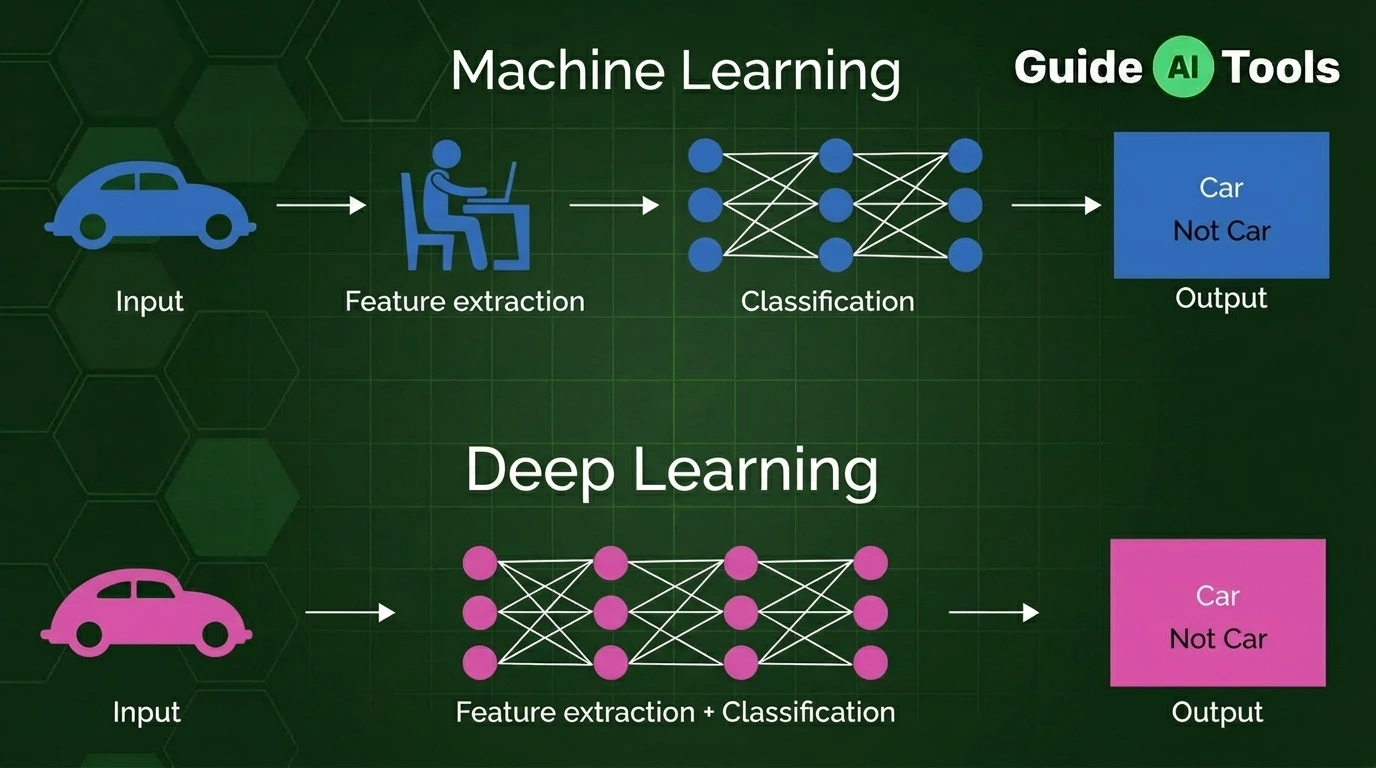
Recurrent Neural Networks (RNNs) and LSTMs processed sequence data one token after another. That sequential design created massive hardware bottlenecks on modern GPUs.
Convolutional Neural Networks (CNNs) excelled at local spatial patterns. However, they struggled to connect distant words separated by long paragraphs.
Transformers replaced those mechanisms entirely.
Transformers process all input tokens simultaneously across parallel GPU memory layers.
The core technical differences between RNNs, CNNs, and transformers appear in the comparison table below.
| Feature | Recurrent Neural Networks (RNNs) | Convolutional Networks (CNNs) | Transformer Models |
| Data Processing | Sequential (Token-by-Token) | Grid-based Local Patches | Parallel (All Tokens Simultaneously) |
| Long-Range Dependencies | Poor (Vanishing Gradients) | Limited to Receptive Field Window | Excellent (Global Self-Attention) |
| GPU Parallelization | Extremely Low | Moderate | High (Optimized Matrix Operations) |
| Training Speed | Slow | Moderate | Exceptionally Fast |
| Primary Use Cases | Legacy Time-Series, Basic Speech | Computer Vision, Spatial Images | LLMs, Multimodal AI, Code Generation |
To study how earlier neural network layers functioned, read our detailed guide on deep learning fundamentals.
How Does a Transformer Model Work?
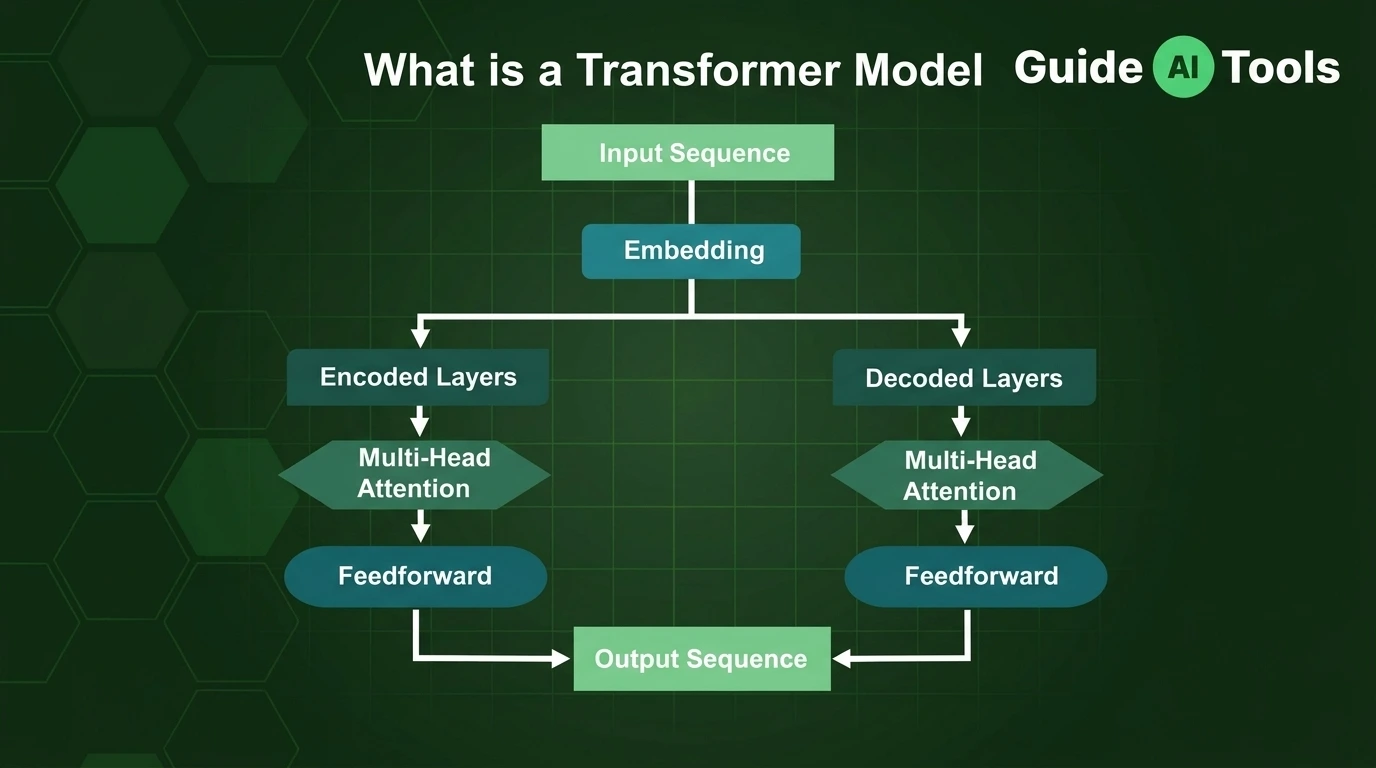
A transformer model processes input text through five core computational steps.
First, raw text converts into numerical vectors called token embeddings. Next, positional encoding vectors merge into those embeddings so the model knows word order without reading word by word.
The self-attention mechanism handles the heaviest workload.
It projects the embeddings into three primary matrices: Query (Q), Key (K), and Value (V).
Think of this like a database search. The Query represents your search string, Keys act as database tags, and Values hold the actual data.
The model computes a dot product between Queries and Keys to generate attention weights. Then it multiplies those weights by the Value matrix.
Multi-Head Attention runs these QKV calculations across multiple projection spaces in parallel. One head tracks grammatical structure while another tracks semantic context.
Query Key Value matrix calculations determine exact word relationships across context windows.
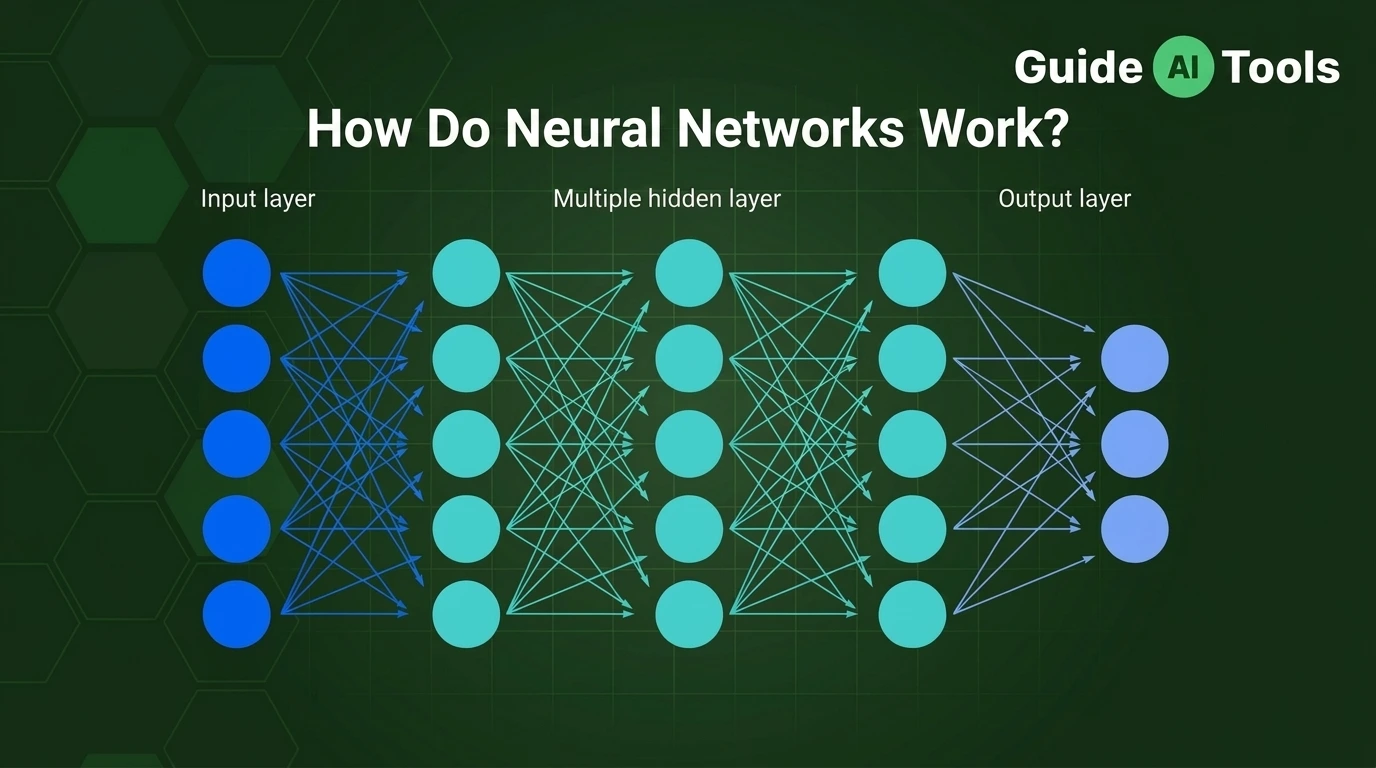
For a breakdown of basic vector operations, check out our explainer on how neural networks work.
Encoder-Only vs Decoder-Only vs Encoder-Decoder Transformers
Not all transformer architectures perform the same job. Teams select distinct setups based on task requirements.
Encoder-Only Models (Understanding and Representation)
Encoder-only models read entire text blocks at once to construct bidirectional contextual representations.
BERT and RoBERTa represent this category. Engineering teams use them for search classification, sentiment analysis, and named entity recognition.
Decoder-Only Models (Generative and Autoregressive)
Decoder-only models generate text from left to right. They predict the next token based on preceding context.
GPT-4, Llama 3, Claude 3, and Mistral rely on this layout. Almost all modern conversational assistants use this design.
Encoder-Decoder Models (Sequence Transformation)
Encoder-decoder models encode input sequences into hidden representations before the decoder constructs a new output sequence.
T5, BART, and OpenAI Whisper use this paired approach. They handle language translation and text summarization effectively.
| Architecture Type | Key Components Used | Prominent Example Models | Best Niche Applications |
| Encoder-Only | Encoder Stack Only | BERT, RoBERTa, DeBERTa | Search Ranking, Sentiment Analysis, Classification |
| Decoder-Only | Decoder Stack Only (Autoregressive) | GPT-4, Llama 3, Claude 3, Mistral | Conversational AI, Creative Writing, Code Generation |
| Encoder-Decoder | Full Encoder & Decoder Stacks | T5, BART, Whisper | Language Translation, Document Summarization |
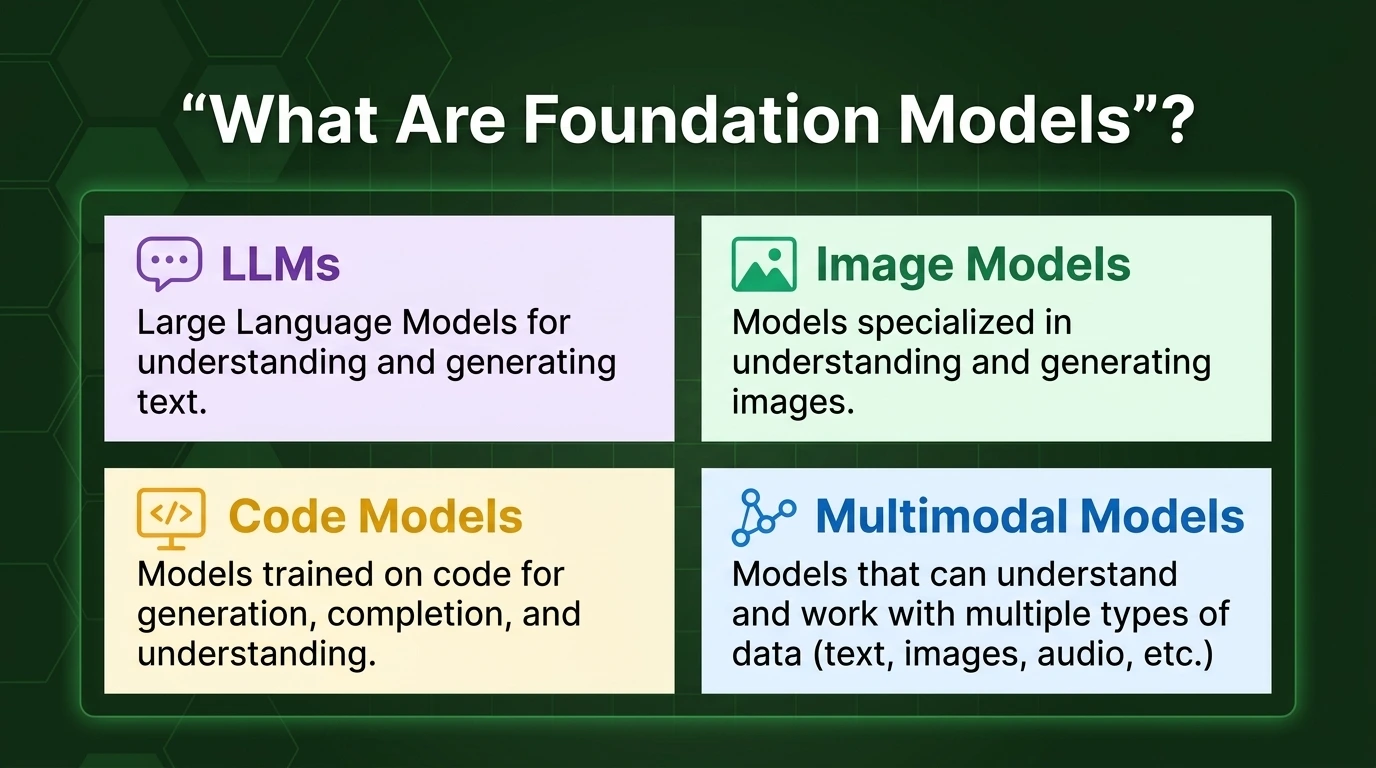
At GuideAITools, we track how large language models increasingly adopt decoder-only designs. To see how these systems scale, review our report on foundation models.
Practical Applications of Transformer Models
Transformers moved beyond simple text processing years ago. They power tools across every major AI domain.
Vision Transformers (ViT) break images into 16×16 pixel patches, treating visual elements like text tokens. That approach sets new accuracy benchmarks in image classification.
In molecular biology, AlphaFold and MegaMolBART process amino acid chains like text sentences. That shift reduced drug discovery timelines from years to days.
GitHub Copilot and OpenAI Whisper rely on the same underlying attention math to parse code and speech.
Multimodal transformers process text images audio and molecular structures inside unified neural vector spaces.
To explore language workflows, read our research overview on natural language processing.
Limitations and Computational Costs of Transformers
Every architecture comes with trade-offs. The primary bottleneck in transformer models involves memory scaling.
Standard self-attention memory scales quadratically with sequence length. Doubling context length quadruples the required memory.
Engineers define this relationship as $O(N^2)$ complexity.
In my testing, pre-training massive models requires expensive server clusters that draw significant electrical power.
Engineering teams manage these costs using FlashAttention, Rotary Positional Embeddings (RoPE), and model quantization.
Quadratic complexity limits how long an unoptimized context window can expand before hardware memory exhausts.
To verify synthetic text outputs generated by these models, test our recommended AI content detector solutions.
FAQs
Why is it called a Transformer?
The architecture earned its name because it transforms input sequences into structured outputs without relying on recurrent processing loops.
What is self-attention in a transformer model?
Self-attention is a mathematical operation that compares every word in a sequence against every other word to calculate context weights.
Do transformer models require labeled data for training?
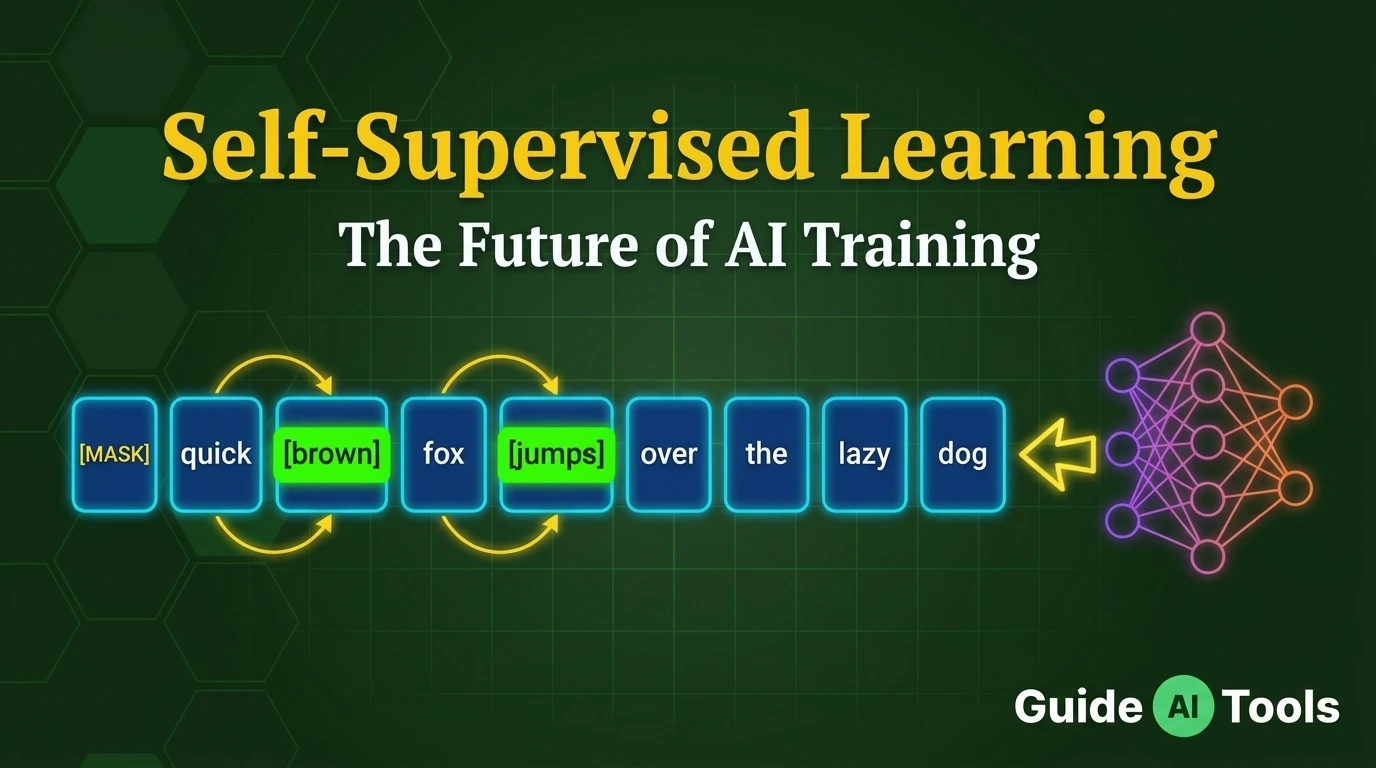
Not during initial pre-training. Transformers use self-supervised learning, predicting masked or missing words inside raw text corpora.
What is the difference between an LLM and a transformer model?
A transformer model is the underlying neural network architecture. A Large Language Model (LLM) is a multi-billion parameter system built on top of that architecture.
Can transformers process images and audio?
Yes. Vision Transformers divide images into visual patches, while audio transformers parse speech waveforms using spectrogram frames.
What is positional encoding and why is it necessary?
Because transformers process all words simultaneously in parallel, they cannot detect word order natively. Positional encodings add order vectors to token embeddings.
The Future of Transformer Architecture
Transformer architecture redefined modern software. Combining multi-head self-attention with positional encodings made modern generative AI possible.
Look, attention mechanisms keep evolving. Innovations like FlashAttention and linear attention variants continue to reduce scaling limits.
GuideAITools continues to benchmark new model frameworks as they launch. Explore our directory to compare active AI implementations.

Related Blog Posts