What Is RAG in AI? Retrieval-Augmented Generation Explained Simply
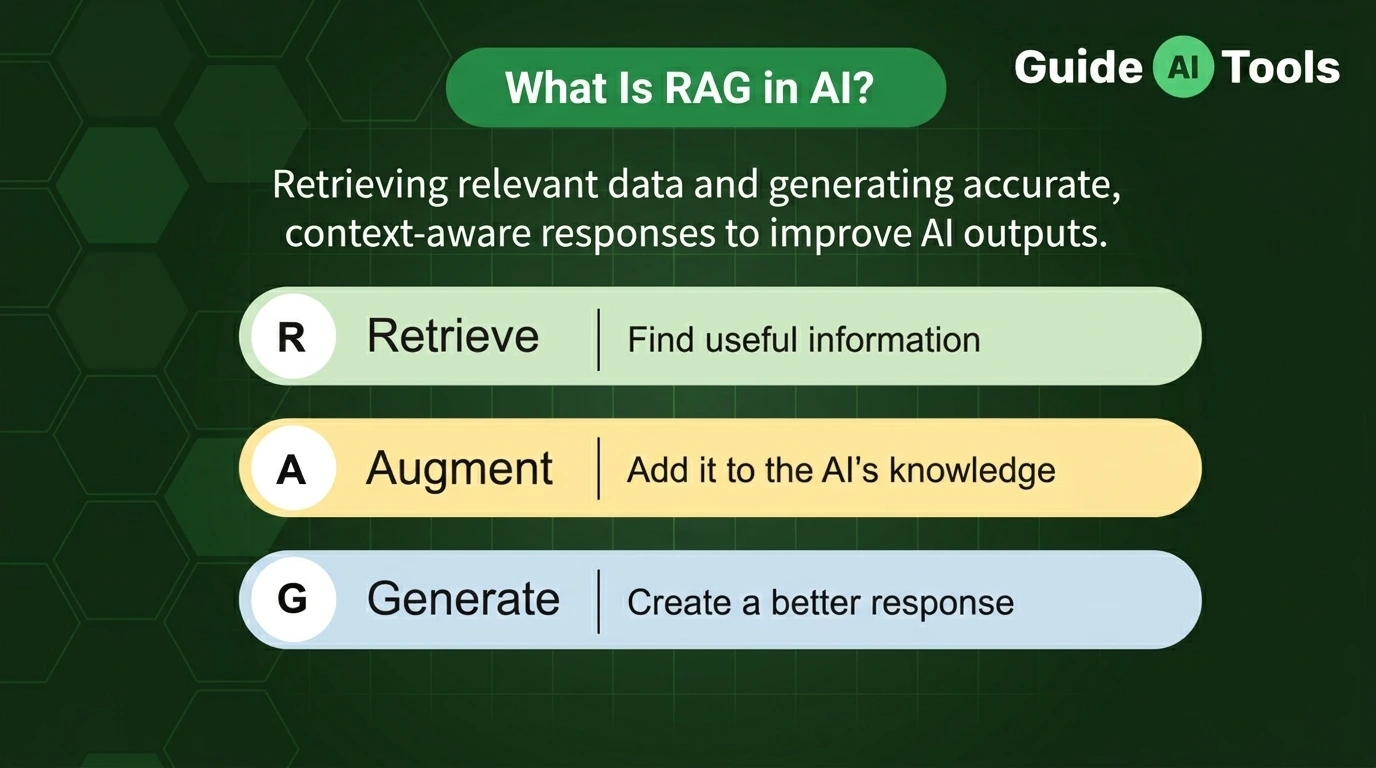
Large Language Models possess incredible reasoning capacity, but they struggle when queried about private company records or recent news events. Unanchored models often fabricate answers or deliver outdated facts. Retrieval-Augmented Generation (RAG) solves this exact problem by connecting internal database files directly to user queries in real time.
What Is RAG in AI?
Retrieval-Augmented Generation (RAG) is an AI framework that connects Large Language Models directly to external databases and private documents. Instead of relying solely on trained memory, the model retrieves relevant source files first before drafting an accurate response. This approach stops hallucinations before they reach the user.
RAG bridges the gap between static model weights and active private data stores. Standard prompt engineering hits strict context limits quickly, whereas RAG searches millions of document pages to fetch exact matching paragraphs.
In my testing with enterprise chatbots, models without direct data retrieval frequently fabricate security policies. Meta AI laid the technical foundation for this approach in the original RAG research paper by Meta AI. If you need a refresher on core concepts, explore our guide on artificial intelligence fundamentals.
RAG fetches relevant document chunks from external databases before generating LLM responses to keep outputs factual.
Why Traditional LLMs Need RAG: The Knowledge Cutoff Problem
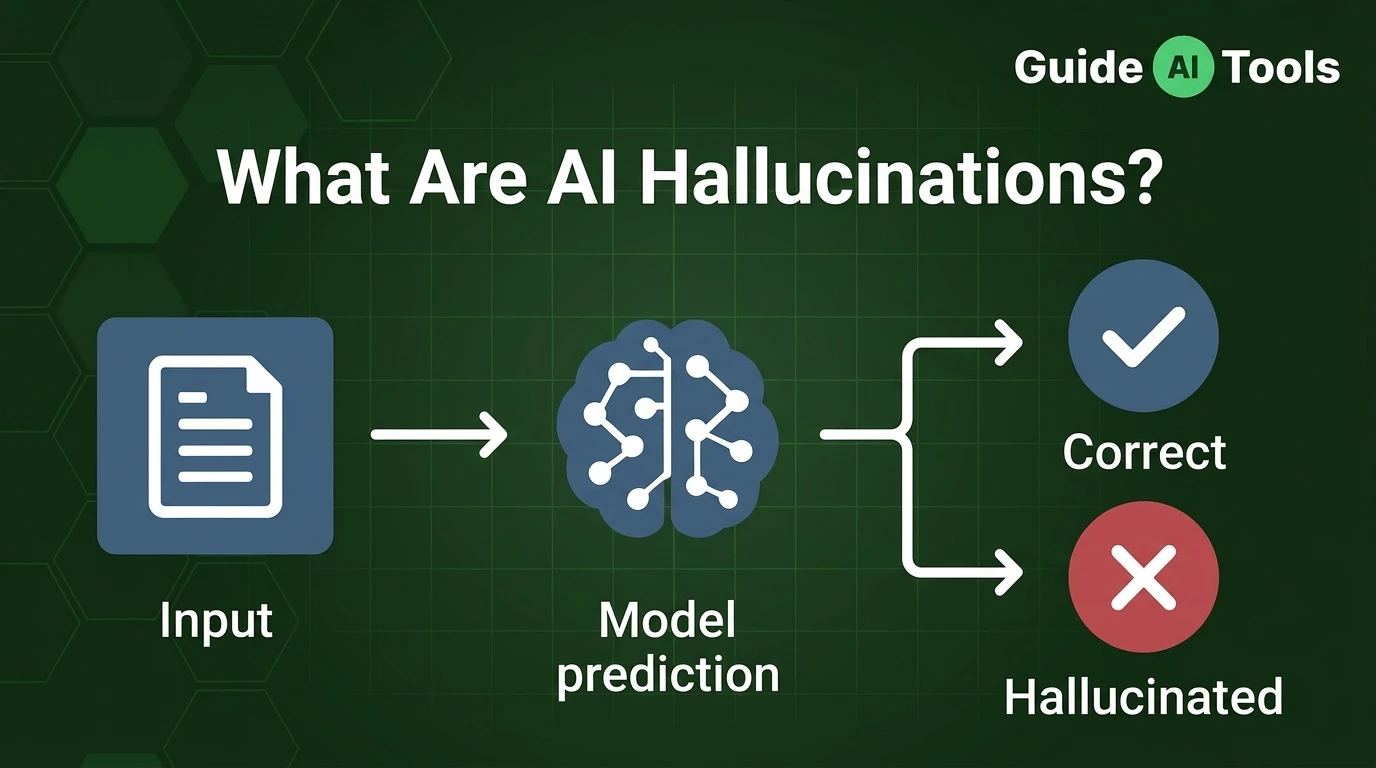
Base models stay frozen on the specific date their training finishes. When you ask a model about recent events or internal company files, it guesses. Engineers call this guessing behavior an AI hallucination.
Retraining a foundation model every week costs thousands of dollars in raw GPU compute. RAG gives you instant access to live information without updating underlying model weights. It keeps private data safe behind your firewall too.
- Standard LLMs rely on frozen memory while RAG models retrieve real-time database facts.
- Hallucination risks drop because RAG anchors every response in verified source text.
- Retraining foundation models costs millions, but running vector search pipelines costs pennies.
- Proprietary company data stays secure without leaking into public training sets.
Look, giving models an open-book library lookup is much smarter than retraining their memory. For a deeper look at model mechanics, read our complete breakdown of large language models.
External knowledge retrieval prevents models from making up facts during complex user inquiries.
How Does RAG Work? Step-by-Step Architecture
The retrieval pipeline operates across five basic steps. First, ingestion tools split raw files into small chunks and generate mathematical vector embeddings. When a user asks a question, the system uses cosine similarity to fetch matching chunks and attach them to the prompt.
| Component | Role in RAG Pipeline | Example Technologies |
| Ingestion & Chunking | Splits large PDFs and docs into smaller text segments | LangChain, LlamaIndex, Unstructured |
| Embedding Model | Converts text chunks into mathematical vectors | OpenAI text-embedding-3, BGE, Cohere |
| Vector Store | Stores embeddings for fast similarity search | Pinecone, ChromaDB, Weaviate, Qdrant |
| Retriever | Fetches relevant chunks using cosine similarity | Hybrid Search, BM25 + Vector |
| LLM (Generator) | Generates final response using query + retrieved context | Claude 3.5 Sonnet, GPT-4o, Llama 3 |
During ingestion, text splitters convert large PDF manuals and Markdown files into uniform segments. Vector databases index these chunks so semantic searches execute in milliseconds.
In the final step, productivity tools like Claude AI scan the injected context window to write a clean answer. The GuideAITools team has observed that vector store selection directly impacts retrieval latency.
Vector search matches user queries with exact document chunks using mathematical similarity scores.
RAG vs Fine-Tuning vs Prompt Engineering: Which Should You Use?
Engineers use three primary strategies to customize LLM outputs. Prompt engineering works well for basic one-off instructions, but RAG is the clear winner for internal document search. Fine-tuning adjusts writing tone and syntax rules, not factual memory.
| Metric | Prompt Engineering | RAG (Retrieval-Augmented) | Fine-Tuning |
| Data Freshness | Manual input only | Real-time dynamic updates | Static cutoff at training time |
| Compute / Cost | Very Low | Low to Medium | High to Very High |
| Hallucination Risk | High | Low (Grounded in source) | Medium |
| Implementation Effort | Immediate | Medium (Database setup) | High (Dataset prep required) |
| Best For | One-off simple tasks | Knowledge bases & docs | Domain voice, style & syntax |
In my practical testing, engineering teams often confuse fine-tuning with knowledge ingestion and burn thousands of dollars. Fine-tuning connects zero live external data sources.
To compare different prompt methods, review our resource on prompt engineering strategies.
RAG is best for real-time document search while fine-tuning customizes writing tone and syntax patterns.
Advanced RAG Techniques: Beyond Basic Vector Search
Standard Naive RAG setups fail when user queries rely on exact keywords or complex phrasing. Advanced systems use multi-stage retrieval pipelines and reranking cross-encoders to improve accuracy.
Hybrid search combines classic BM25 keyword matching with dense vector embeddings. This approach captures exact terminology alongside semantic intent.
- Hybrid search pairs BM25 keyword matching with dense vector retrieval algorithms.
- Reranking models re-order retrieved chunks so the most relevant facts sit at the top.
- GraphRAG builds structured knowledge graphs to map complex entity relationships across files.
- Context compression strips out fluff sentences before passing tokens to the generator.
Honestly, most teams mess this up by relying strictly on vector similarity without reranking. Adding Cohere or BGE rerankers boosts answer quality right away.
Reranking models filter retrieved text chunks to remove irrelevant context before sending final prompts to LLMs.
Common RAG Challenges and Real-World Fixes
Choosing the right chunk size requires careful balance. Small chunks lose surrounding context, while massive chunks dilute vector similarity scores.
The “Lost in the Middle” bug happens when LLMs ignore facts hidden in the center of long context windows. System architects fix this by placing top matching chunks at the very beginning and end of the prompt.
The truth is, vector stores pull noisy matches if source files contain poor formatting. Building clean data extraction steps is mandatory for high accuracy. Read our guide on AI hallucinations and risks to learn more about model failure modes.
Placing retrieved context at the start and end of prompt windows prevents models from ignoring critical facts.
Real-World Business Applications of RAG
Enterprise support agents rely on RAG pipelines to answer customer tickets accurately. Agents query live policy databases to solve issues without making up refund rules.
Legal analysis platforms search thousands of court filings to surface precedents in seconds. Medical research tools scan clinical trial logs to highlight precise drug dosage guidelines.
- Internal corporate wikis let employees search HR handbooks instantly.
- Financial analytics tools parse SEC filings to flag operational risk factors.
- Technical support bots scan software documentation to resolve customer bugs.
- Code assistants query internal git repositories to explain legacy codebases.
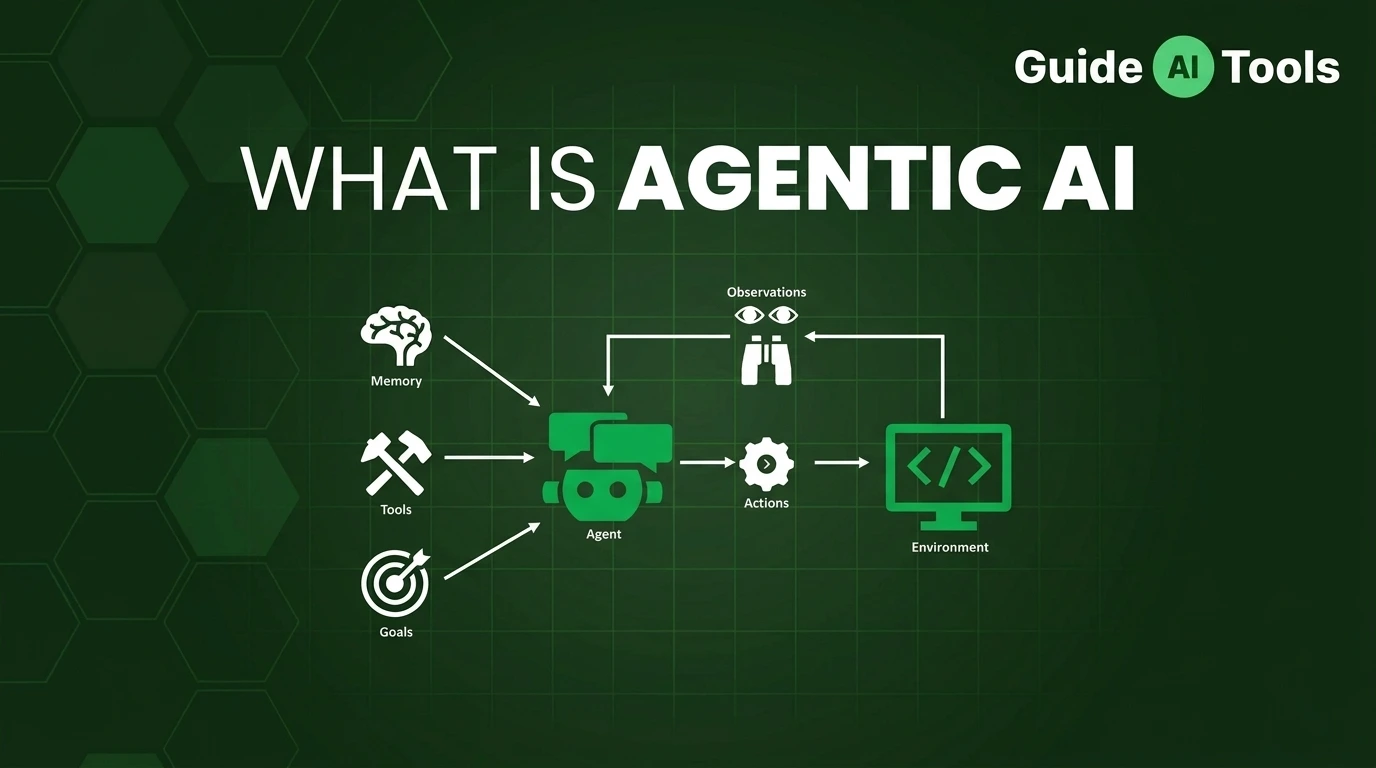
The GuideAITools platform catalogs hundreds of software tools built on these exact retrieval architectures. If you want to explore autonomous workflows, check out our guide on autonomous AI agents.
RAG enables corporate chatbots to answer employee policy questions directly from internal documentation.
FAQs
What does RAG stand for in artificial intelligence?
RAG stands for Retrieval-Augmented Generation. It is an AI framework that connects Large Language Models to external vector databases to retrieve factual information before generating text responses.
How does RAG reduce AI hallucinations?
RAG forces the LLM to base its answers directly on retrieved source document chunks rather than relying solely on internal parametric memory.
What is the difference between RAG and fine-tuning?
RAG dynamically fetches external live data without changing model weights. Fine-tuning updates internal model parameters on a static dataset to change writing style or specialized task behavior.
Why is vector database necessary for RAG?
Vector databases store document embeddings as mathematical coordinates, allowing the retriever to perform ultra-fast semantic similarity searches across millions of text chunks.
What are the main components of a RAG pipeline?
The main components include document ingestion and chunking, embedding generation models, vector database storage, semantic retrievers, and the LLM generator.
What is chunking in RAG architecture?
Chunking is the process of splitting long documents like PDFs into smaller, manageable text blocks before generating vector embeddings for search storage.
Is RAG cheaper than fine-tuning an LLM?
Yes, RAG is significantly cheaper because it avoids expensive GPU training compute runs, requiring only standard database storage and embedding API calls.
What are the limitations of RAG in AI?
RAG struggles if input document parsing is noisy, if chunk size is configured poorly, or if the retrieval step fetches irrelevant context due to bad search queries.
Conclusion & Next Steps for AI Developers
Retrieval-Augmented Generation is now the industry standard for building reliable enterprise AI applications. Linking reasoning models to live database records eliminates hallucinations while protecting private documents.
Building a dependable RAG pipeline takes continuous testing across chunking strategies, vector stores, and rerankers. Explore the developer resources on GuideAITools to find the right vector databases and frameworks for your tech stack.

Related Blog Posts