How Is AI Used in Finance?
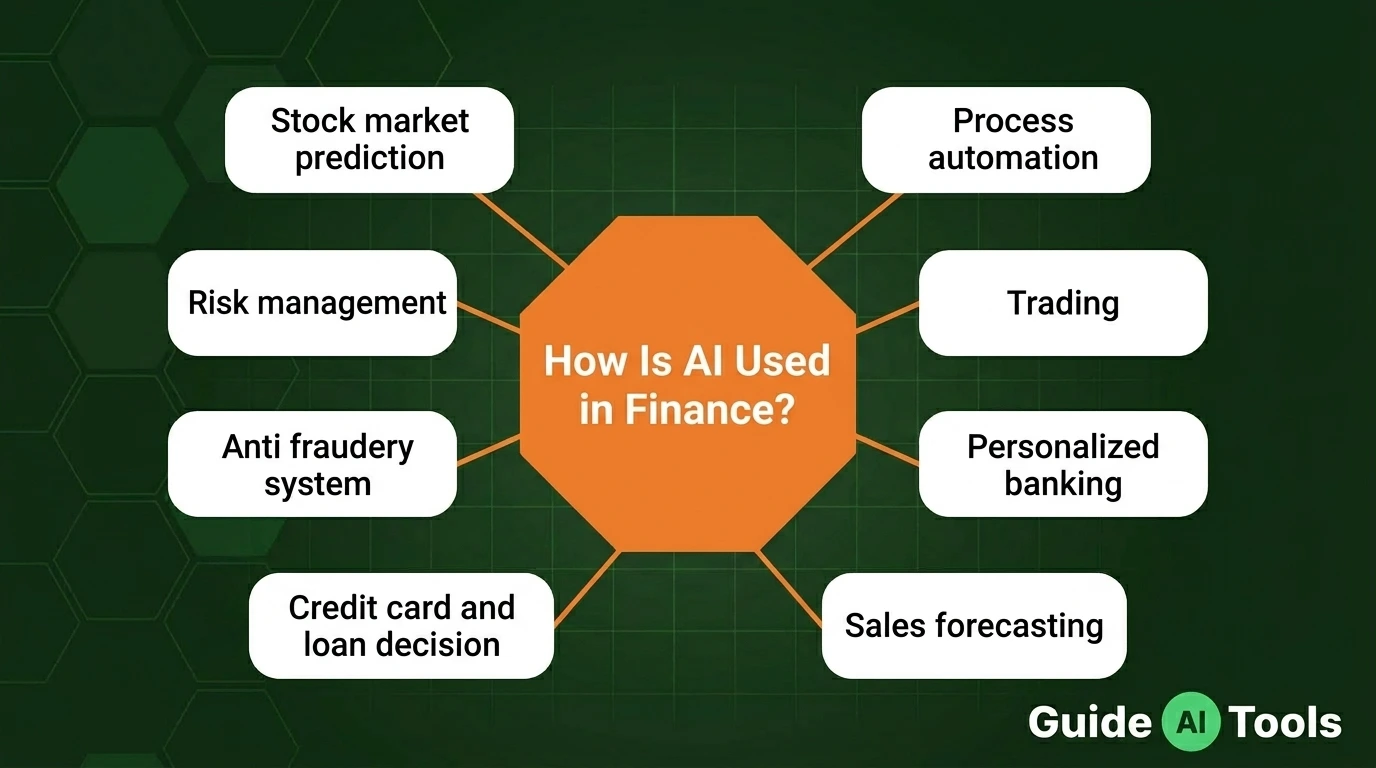
AI in finance is the use of artificial intelligence across banks, insurers and trading firms to detect fraud, score credit, read documents, run trades and serve customers at a scale no human team can match. It covers the hidden systems that watch every transaction and the apps customers open each day.
Most explanations blur those two worlds together. That is a mistake.
The model that flags your card payment at midnight is not the same thing as the assistant inside your banking app. They do different jobs. And they fail in different ways.
This article keeps the two sides apart, so you can see what AI does for the institution and what it does to you.
The Two Sides of AI in Finance
One side of AI in finance runs deep inside the institution. It monitors transactions, reads contracts, checks identities and watches for laundering. Customers never see it, yet it touches almost every account, every day.
The other side faces you directly. It answers questions in the banking app, sorts your spending into categories and nudges you to save before payday. Same technology family, completely different job.
| Use case | Where it runs (back office or customer-facing) | What it does | Main risk |
|---|---|---|---|
| Fraud detection | Back office | Scores every transaction for signs of theft or misuse | Legitimate payments get blocked |
| Credit scoring and underwriting | Back office | Judges loan and card applications against risk models | Biased or unfair lending decisions |
| Anti-money laundering monitoring | Back office | Flags transaction patterns that suggest laundering | Large volumes of false alerts |
| Document processing and KYC | Back office | Reads contracts, statements and ID documents | Errors in extracted data |
| Algorithmic trading | Back office | Buys and sells assets at machine speed | Feedback loops and flash crashes |
| Chatbots and virtual assistants | Customer-facing | Answer account questions and handle routine tasks | Wrong or unhelpful answers |
| Robo-advisors | Customer-facing | Build and rebalance simple investment portfolios | Poor fit for complex situations |
| Personalised alerts and budgeting help | Customer-facing | Warn about spending, bills and unusual activity | Noise that users learn to ignore |
Back-Office AI: The Work Customers Never See
Fraud Detection and Transaction Monitoring
Every card payment you make gets scored in a fraction of a second. Machine learning models compare the amount, the location, the device and the timing against your normal behaviour and against patterns seen in known fraud.
A payment that fits your life sails through. One that does not gets declined, flagged or sent to you for confirmation.
This is now standard practice at large banks. The chair of the ECB’s supervisory board has cited supervisory data showing 64 percent of directly supervised banks use AI against fraud and cybercrime, a fight that overlaps heavily with AI in cybersecurity.
And the trade-off lands on you. Aggressive models stop real fraud, but they also freeze honest customers at airport checkouts and fuel stations abroad.
Banks call these mistakes false positives. You call it a declined card on holiday.
Credit Scoring and Underwriting
When you apply for a loan or a card, a model reads your file before a human ever sees it. It weighs your income, your debts and your repayment history. Some lenders add alternative data, such as rent payments or the cash flow through your account.
Underwriting is the judgement of whether to lend to you and at what price. Increasingly, that judgement starts with the model’s score, and the answer can arrive in minutes.
Fast, yes. Always fair? No.
Models trained on old lending data can repeat the patterns buried inside it, including patterns that punished certain neighbourhoods or income types. You may get a refusal with no clear reason, from a system that cannot explain itself in plain words. That fairness problem is exactly why credit scoring sits on the strictest regulatory lists, as the regulation section below explains.
Compliance, AML and Document Processing
Banks must know who their customers are and watch for money laundering. The watching duty is called AML, short for anti-money laundering.
The identity checks when you open an account are KYC, or know your customer. AI systems now scan transactions for laundering patterns and read the paperwork behind them.
Document reading holds the famous example. JPMorgan built a system called COiN that reviews commercial loan agreements in seconds. Bloomberg reported that this work once consumed about 360,000 hours a year from lawyers and loan officers, spread across roughly 12,000 contracts.
Optical character recognition and language models pull names, dates and clauses out of statements, contracts and ID cards, then hand clean data to compliance staff. Humans still make the final call on suspicious cases. The machines do the reading.
AI in Trading and Investment
Algorithmic and High-Frequency Trading
Algorithmic trading means software, not a person, places trades under rules set in advance. That is the plain definition, and it covers a wide range.
Simple versions spread one large order slowly across the day so the price does not jump. High-frequency versions trade in tiny fractions of a second, thousands of times, chasing small price gaps between markets.
The scale is hard to overstate. Estimates linked to the Bank for International Settlements triennial survey put algorithmic trading at roughly 60 to 73 percent of US equity trading volume. Most of what moves on a stock exchange now starts as code.
Research, Sentiment and Portfolio Support
Traders also use AI to read. Language models scan earnings calls, company filings and news wires, flagging tone shifts and pulling out the numbers that matter. When the job is tracking how positive or negative the coverage sounds, analysts call it sentiment analysis.
Deep learning models hunt for patterns across years of price and economic data, patterns too tangled for a person to spot by eye.
So can AI predict the stock market? No.
Models find patterns in old data, and markets keep producing situations the data never contained. A model can look right for a year and then fail in a single week. Anyone who sells you certainty on this point is selling something.
Customer-Facing AI: The Part You Actually Touch
Chatbots and Virtual Assistants
Open your banking app and the assistant that greets you runs on natural language processing, the technology that lets software read and answer everyday language. Bank of America says its assistant, Erica, has passed 3 billion customer interactions, a figure the bank reports itself.
Balances, card freezes, transaction searches, branch hours. These are the jobs chatbots handle well, and they handle them at 2 in the morning without a queue.
The limits show up fast. Ask about a disputed charge or a fee you do not recognise and most assistants start looping, then hand you to a human.
That hand-off is not a design failure. For anything with real money at stake, it is the design.
Robo-Advisors and Personal Finance Tools
A robo-advisor is software that builds a simple investment portfolio for you. It asks about your goals and your comfort with risk, spreads your money across funds that match your answers, and rebalances automatically when markets drift away from the plan. Low fees and low minimum deposits made these tools popular with first-time investors.
Around them sit quieter tools. Your banking app sorts spending into categories, warns you before a bill empties your account and suggests moving spare cash into savings.
Small nudges. Constant presence.
Will AI replace human financial advisors? Not on the evidence so far. The work is shifting instead.
Software absorbs routine portfolio chores and paperwork, while human advisors keep the judgement calls, the tax questions and the hard conversations about fear, family and retirement. Fewer routine tasks per advisor, not zero advisors.
When AI in Finance Gets It Wrong
Models fail in boring ways first. Feed a fraud model a holiday spending spike, or a credit model an unusual career path, and it can still produce a confident, wrong answer.
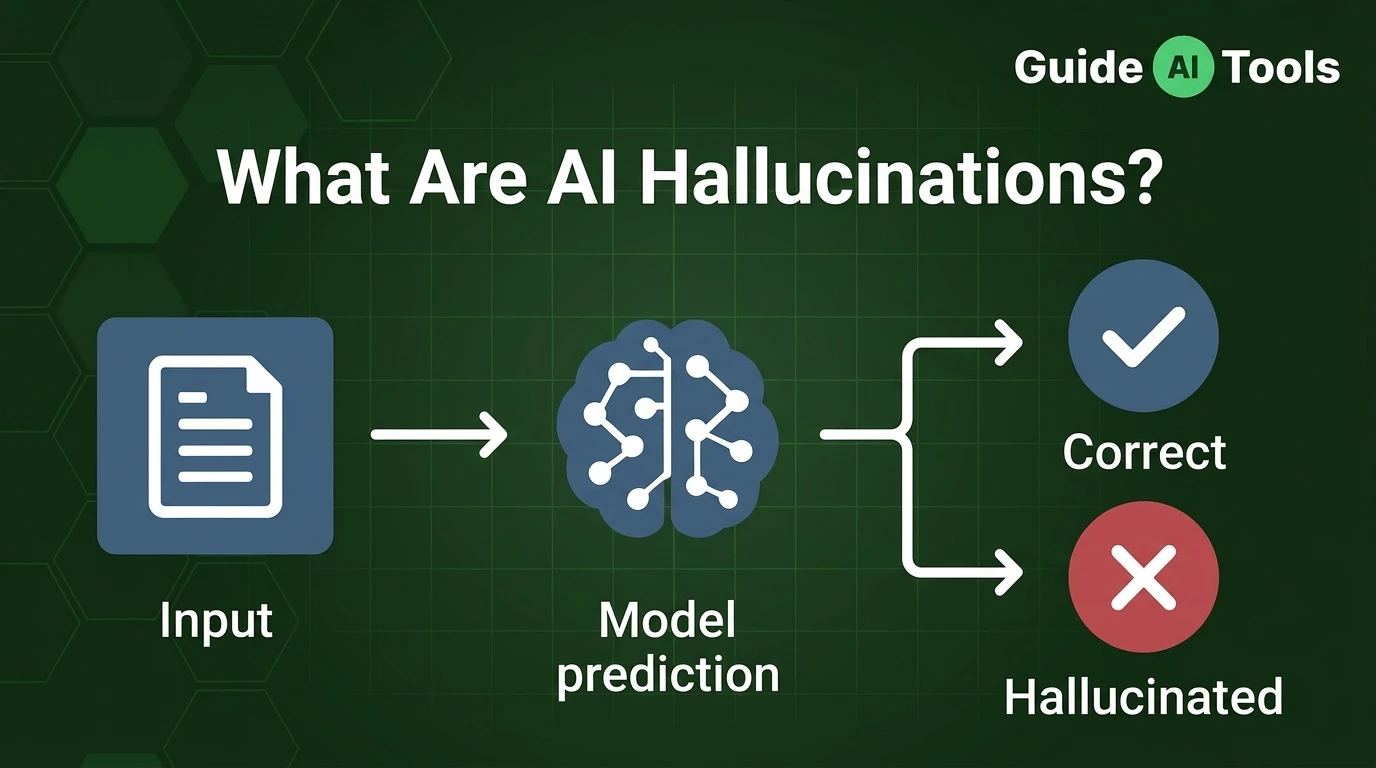
Systems that generate text can go further and state invented figures as fact, the failure covered in our guide to AI hallucinations. In finance, a wrong number is not a trivia error. It can move money.
Bias is the second failure. A lending model trained on years of human decisions learns those decisions, unfair ones included.
The output looks neutral because it is just a number. The history inside it is not.
Then come the fast failures. On 6 May 2010, the Dow Jones Industrial Average fell 998.5 points in minutes, about 9 percent, before recovering much of the loss the same day.
A very large automated sell order hit a market already run by algorithms, and automated systems fed the fall instead of absorbing it. Exchanges later added automatic trading halts to slow this kind of spiral.
Two years later, Knight Capital lost about 440 million dollars in roughly 45 minutes when faulty trading software fired off unintended orders. The firm nearly collapsed. Speed is the selling point of these systems, and speed is what turns a small fault into a historic loss before a human can reach the switch.
There is a quieter version of the same problem, and it worries regulators. When many firms run similar models on similar data, the models can all reach the same conclusion at the same second and trade the same way, turning a small shock into a stampede. Our page on the risks of AI follows that pattern beyond finance.
How AI in Finance Is Regulated
Regulators have stopped treating AI as a general IT question. In the European Union, the EU AI Act puts two finance uses on its high-risk list: evaluating a person’s creditworthiness or setting their credit score, and risk assessment and pricing for life and health insurance.
High-risk status brings duties on data quality, documentation, record keeping and human oversight. Fraud detection sits outside that particular list, a carve-out written into the Act itself.
Central banks are building the wider view. Christine Lagarde told the European Systemic Risk Board conference that central banks treat AI as a risk that can spread across the whole financial system, and she noted that nearly nine out of ten significant euro area banks already use generative AI. The Financial Stability Board publishes governance expectations along similar lines.
So how is AI regulated in finance, in one sentence? Firm by firm, through existing supervisors, with the strictest duties landing on the decisions that can lock a person out of credit or insurance.
Firms may run the models. They must be able to explain them.
FAQs
How is AI used in finance?
Banks, insurers and trading firms use AI to detect fraud, score loan applications, read contracts and identity documents, watch for money laundering and run trades. Customers meet it as app assistants, spending alerts and robo-advisors. Most of the machinery sits in the back office, watching transactions and paperwork at a scale staff cannot match.
How do banks use AI to detect fraud?
Models score each transaction as it happens, comparing the amount, place, device and timing with your habits and with known fraud patterns. Ordinary payments pass in a fraction of a second. Odd ones get blocked or sent to you for approval, which is why a genuine purchase in a foreign shop sometimes gets declined.
Can AI predict the stock market?
No. Trading models find patterns in past data and act on them quickly, which helps with execution and research, but markets react to events the data has never seen. A model that worked last year can fail badly this year, and no serious firm treats AI output as a forecast you can trust.
Is my money safe with AI banking tools?
Your deposits sit under the same banking rules and deposit protection whether a model or a person reviewed the transaction. The realistic risks are smaller and more annoying: a wrongly blocked card, a useless automated answer, or careless handling of your data. Firms stay legally responsible for the systems they run.
Will AI replace bank staff and financial advisors?
It replaces tasks before it replaces people, and document reading, routine questions and transaction monitoring now need far fewer staff hours than they did. Work that needs judgement, trust and accountability still lands with humans, from untangling a fraud case to advising a family after a death. Some teams shrink, while model oversight roles grow.
What is the biggest risk of AI in finance?
Correlated failure is the biggest risk, because one bad model hurts one firm while hundreds of similar models, trained on similar data and reacting in the same second, can hurt the whole market. Add biased lending decisions and confidently wrong outputs, and the pattern is clear. The danger is rarely one brilliant machine, it is many ordinary ones failing together.
Conclusion
AI already sits inside most financial decisions that touch you, from the card payment that cleared this morning to the loan answer that took minutes. The gains are speed and scale. The failures arrive when models meet a world they were not trained on, and no rulebook has fully caught up with that yet.
Keep reading the fundamentals on this site, starting with the wider benefits of AI in everyday life, and explore our AI tools coverage to see these same systems packaged for your own work, study and business.

Related Blog Posts