How Is AI Used in Education?
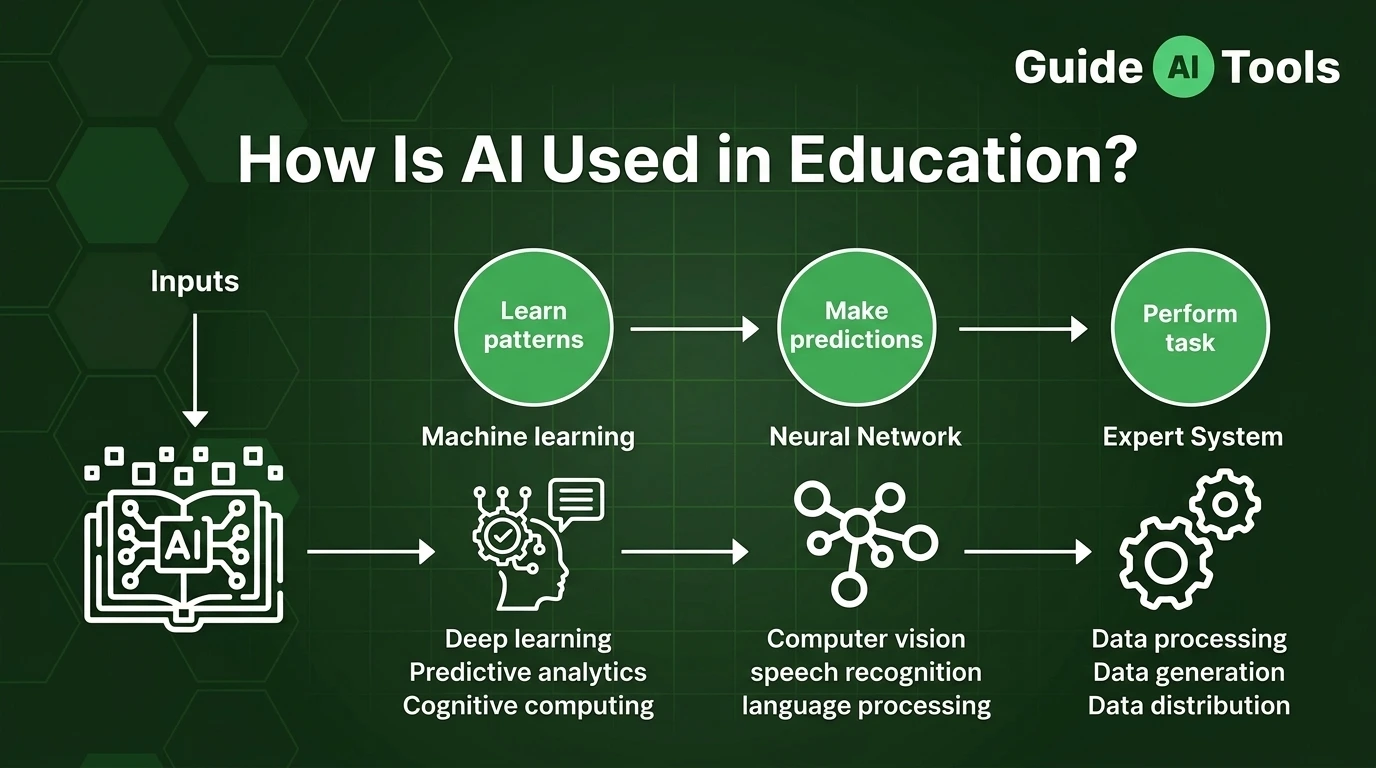
AI in education is software that learns from data and helps people teach and learn. It walks a student through a hard problem one step at a time. It drafts comments on essays, builds practice questions at the right level, and handles routine admin so teachers can teach.
That help looks different depending on who you are. A student needs a patient tutor at 9 pm. A teacher needs feedback drafted before the next class. A school leader needs early warnings when a learner starts to slip. All three rest on the same base: what artificial intelligence is.
And it keeps the hard parts in view. Wrong answers, privacy, cheating, and the line between help and doing the work for someone.
What counts as AI in education
A tool counts as AI when it reacts to the learner in front of it. It reads an answer and works out what went wrong. It picks the next question based on the last one. Or it writes an explanation in words the student has not seen before. A quiz that only checks answers against a fixed key does none of that. That is automation, not AI.
Three building blocks sit underneath most of these tools. Machine learning finds patterns in past results, like which mistakes predict a failed exam. Generative AI creates new text, questions, and feedback. And the chatbots students talk to run on large language models, trained on huge amounts of text so they can talk about almost any subject.
The test is simple. If every student gets the same thing in the same order, it is automation. If the tool changes its response based on what a student just did, that is AI.
How students use AI
In a classroom, students meet AI as a tutor, a practice partner, and a reading helper. They ask it to explain a topic again, in simpler words. They test themselves before a quiz. At home the same tools become homework support, which is exactly where the rules matter most.
Tutoring and step by step explanations, with hints instead of finished answers
The best AI tutors refuse to hand over the answer. Khanmigo, the tutor built by Khan Academy, answers a question with another question, then offers a hint, then one small step. The student still does the thinking. That design matters, because a finished answer teaches almost nothing.
It just feels like progress. The engines behind tutors like this are large language models, the same technology behind the chatbots students already know.
Practice, quizzes and instant feedback
Practice is where AI earns its keep. A student can ask for ten questions on fractions, get them marked on the spot, and see which step keeps going wrong. Adaptive practice also answers how AI personalizes learning. The questions get harder when answers come easily and easier when they do not, so practice sits at the level where learning actually happens.
Language learning and reading support
Language apps use AI to listen to pronunciation and correct it gently, word by word. Reading tools can simplify a dense passage, define hard words in place, and read text aloud. For a student learning in a second language, that support can be the difference between guessing and understanding.
Study planning and revision help
AI can turn a syllabus and an exam date into a revision plan, then break it into daily sessions. It can turn class notes into flashcards and likely questions. The plan is the easy part, though. A student still has to sit down and follow it.
Accessibility support, such as speech to text, text to speech and translation
For some learners, AI removes a barrier instead of adding a shortcut. Speech to text lets a student with dyslexia get ideas down before they vanish. Text to speech reads long chapters aloud for a student with low vision. Translation tools let a newcomer follow the same lesson as everyone else, in a language they understand.
How teachers use AI
Teachers use AI to win back time. The working week fills with planning, marking, and messages home, and AI drafts the first version of much of it. A teacher who gets an evening back spends it on the students who need a human, not on paperwork.
Lesson planning and teaching materials
A teacher can describe Friday’s topic and get a lesson outline, three versions of the same worksheet at different levels, and a set of discussion questions. The draft is not the lesson. It is a starting point the teacher fixes, cuts, and improves. What once took an hour of blank page can now take minutes of editing.
Draft feedback and help with grading
AI can mark objective questions instantly and draft comments on essays, pointing at a weak argument or a missing example. The teacher reads the drafts, changes what is off, and adds what only they know about that student. Grading gets faster. The judgment stays human, which is where it belongs.
Spotting learning gaps with class data
When a whole class answers practice questions, patterns show up fast. If most students miss the same step, the problem is the teaching point, not the students. Learning analytics dashboards flag those patterns and the learners who have gone quiet, so a teacher can step in this week instead of after the exam.
Admin and parent communication
The quiet wins are admin wins. AI drafts the newsletter, turns meeting notes into action points, and writes the first pass of a progress report. It can translate a message home into the language a family speaks. None of this is glamorous. All of it is time returned to teaching.
How institutions use AI
Above the classroom, schools and universities run AI on the operations side. Admissions teams use chatbots to answer applicant questions at midnight, in several languages. Those support bots are a simple form of AI agents, software that can hold a conversation and complete small tasks alone.
A flagged name is not a verdict. Early warning systems watch attendance, grades, and course activity, then flag students whose pattern matches past dropouts. A flag is a prompt for a human to check in early, while help can still change the ending.
Timetabling, enrolment, and routine reporting also move to AI tools, which juggle thousands of constraints faster than a person with a spreadsheet. One more use schools forget to count: writing the AI policy itself, and training staff to follow it.
None of this works without trust. Institutions hold sensitive data on children and young adults, so leaders have to ask hard questions about privacy, consent, and who sees what before any tool goes live.
AI in education at a glance
| Use case | Who it helps | Example | Watch out for |
|---|---|---|---|
| AI tutoring | Students | A tutor that gives hints, not answers | Wrong explanations sound confident |
| Adaptive practice | Students | Questions that adjust to each answer | Narrow drilling can crowd out deeper work |
| Automated grading | Teachers | Instant marking of quizzes and drafts | Draft comments still need a human read |
| Lesson planning | Teachers | Worksheet versions at three levels | Generic material needs local fixing |
| Learning analytics | Teachers and schools | Dashboards that flag falling behind | Data can label a student unfairly |
| Accessibility tools | Students | Speech to text, read aloud, translation | Quality varies by language and accent |
| Student support chatbots | Schools | Answers to admissions questions at any hour | Bad answers at scale, fast |
Benefits of AI in education
The clearest benefits of AI in education are personal practice at the right level, faster feedback, and time handed back to teachers. A student no longer waits a week to learn that step three was wrong. A teacher no longer spends Sunday night on work a draft could start. Access widens too, for learners who were shut out before.
Personalization is the benefit students feel first. Practice meets them where they are, not where the class average sits. And access is the benefit schools should not underrate. A learner with a disability, or one studying in a second language, gets support that used to need a specialist in the room.
None of these benefits arrive on their own. They show up when teachers choose the tools, set the rules, and keep checking the results.
Risks and limits
The main risks of AI in education are wrong answers taught as facts, practice that quietly disappears, and student data collected without care. There is also bias in what the tools produce and in the tools that police them, plus a plain access problem. Not every learner has a device, a connection, or a quiet room.
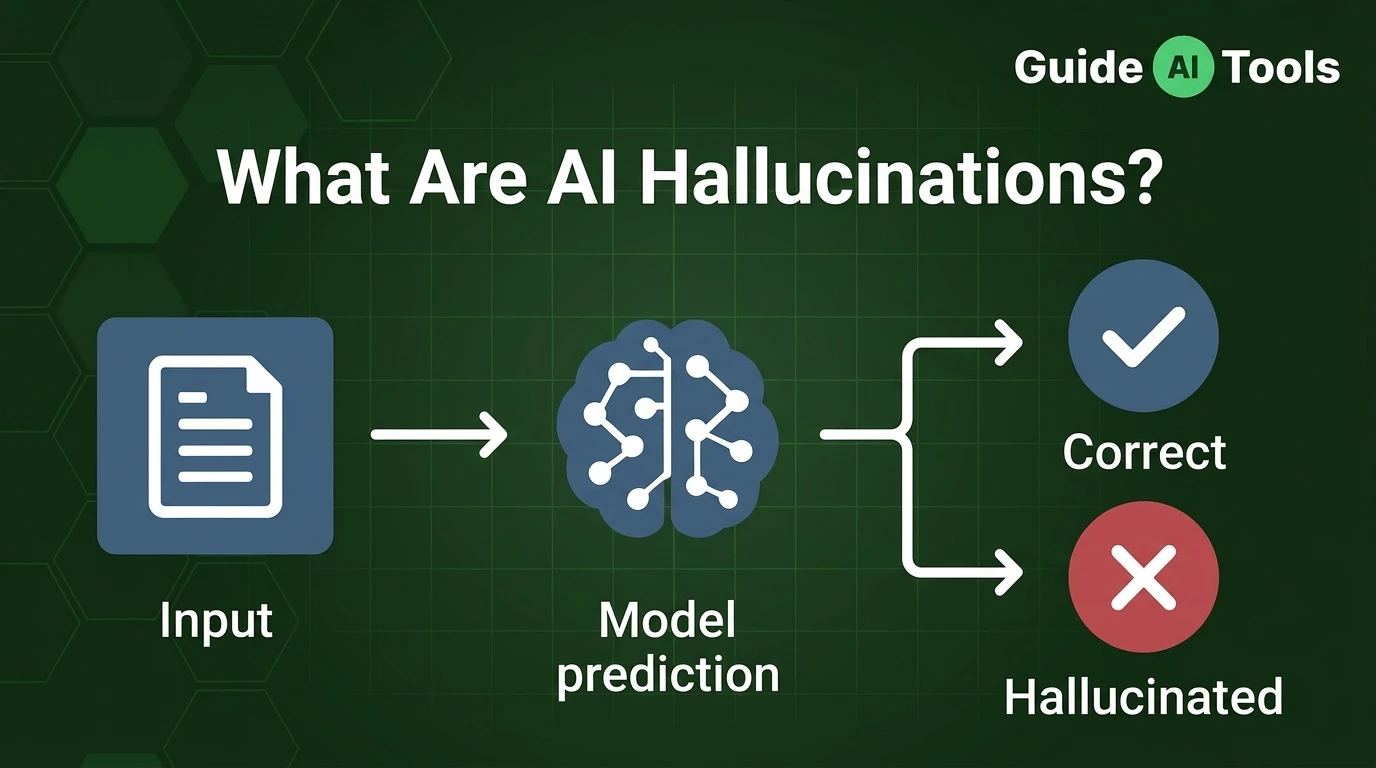
Start with wrong answers. AI systems produce AI hallucinations, confident statements that are simply not true, complete with invented dates and sources that do not exist. A strong student might catch one. A beginner usually cannot, because spotting the error needs the very knowledge they are trying to build. So the wrong fact gets learned, underlined, and repeated in the exam.
Then there is the quiet loss of practice. Learning is effort, and the effort is the point. When a tool does the reading, the summarizing, and the first draft, the student’s own thinking gets skipped. Used that way every day, AI does not make a learner stronger. It makes the learner dependent, and the gap only shows up when the tool is gone.
Privacy matters because these tools collect essays, questions, and behavior data from minors. Schools carry legal duties here, FERPA in the United States and GDPR in Europe, and a free tool with vague data terms can break them. Bias cuts both ways. Content can favor some cultures and histories over others, and detection software has its own bias problem, covered in the integrity section below. Underneath it all sits the divide. Paid tools and fast connections cluster in rich schools, while the learners who could gain most get the least.
Academic integrity, the honest version
Let us draw the line plainly. Submitting AI output as your own work is cheating. So is hiding AI help where the rules require you to declare it, and using a chatbot in a test or assignment where the teacher has banned it. The common thread is deception. The reader is meant to believe the thinking was yours when it was not.
Allowed help looks different. Most school and university policies accept brainstorming, grammar checks, practice questions you set yourself, and tutoring style explanations. The student still produces the work. AI just helped them prepare, the way a friend quizzing you before an exam helps you prepare.
Detection tools cannot settle these cases on their own. They guess from writing patterns, and the guesses misfire. In a 2023 Stanford study, popular detectors flagged 61 percent of essays written for TOEFL tests by non-native English speakers as AI generated, while native student writing passed almost untouched. A score like that is a prompt to talk, not proof of guilt. This is why UNESCO built its guidance for generative AI in education around human judgment, clear rules, and an age limit of 13 for classroom use, rather than around punishment software.
Schools are answering by changing the assessment, not just the policing. Drafts and notes get handed in with the final piece, so process becomes visible. More writing happens in class, some checks turn oral, and questions tie to work done together in the room. An answer with no process behind it looks exactly like what it is.
How to use AI well as a learner
Four habits separate students who learn with AI from students who lean on it. None of them needs a special tool or a paid plan.
- Attempt first. Try the problem, draft the paragraph, then ask AI for help with the part that beat you.
- Ask for hints. Tell the tool to explain and question you, not to write the answer.
- Check every fact. Look up names, dates, and quotes in a textbook or a source you trust before you learn them.
- Declare the help. If the rules ask where AI helped, say so plainly.
These habits feel slower. They are slower, the way training with weights is slower than watching someone else lift. The slowness is where the learning lives.
Frequently asked questions
Can AI replace teachers?
No. AI can draft a worksheet, mark a quiz, and answer a simple question at midnight, but teaching is reading a room, noticing who went quiet, and knowing which explanation will land for this child today. Tools handle tasks around teaching. The judgment, care, and motivation stay human, and students know the difference.
Is using ChatGPT for homework cheating?
It depends on the use and the rules. Asking ChatGPT to explain a topic, quiz you, or check your grammar is help most schools accept. Copying its answer into your homework and handing it in as your work is cheating, and so is hiding the help where your teacher requires you to declare it.
How do AI tutors work?
An AI tutor holds a conversation about the problem in front of you. It asks what you have tried, gives a hint, and checks your next step before moving on. Good tutors, Khanmigo among them, are built to withhold the final answer and make you reason, adjusting each question to what you just did.
Is AI safe for children to use for schoolwork?
With supervision, mostly yes, and without it, not reliably. Children can meet wrong facts, content that is too old for them, and tools that collect their data. UNESCO suggests a minimum age of 13 for classroom use of generative AI. Under that age, school approved tools and an adult nearby are the safer setup.
How does AI help students with disabilities?
AI turns text into speech for students who struggle to read print, and speech into text for students who struggle to write. It can simplify a passage without removing its meaning, translate lessons for newcomers, and give patient, endless practice with no embarrassment. For many learners, that support is access itself, not a shortcut.
Will AI make students stop thinking for themselves?
It can, if the tool always goes first. A student who pastes every question into a chatbot skips the struggle that builds understanding, and skills fade fast. But a student who attempts the work, then uses AI to test and stretch their answer, thinks more, not less. The order of use decides the outcome.
Conclusion
The pattern is the same. AI does the repeatable work well and the human work badly. Give it the drafts, the drills, and the data. Keep the judgment, the honesty rules, and the final call with people. Choosing tools for a class or a school? The education categories on GuideAITools are a good place to compare what is out there. And if you want the same honest tour for other fields, read our guides on AI in healthcare, finance, and cybersecurity.

Related Blog Posts