How Is AI Used in Cybersecurity?
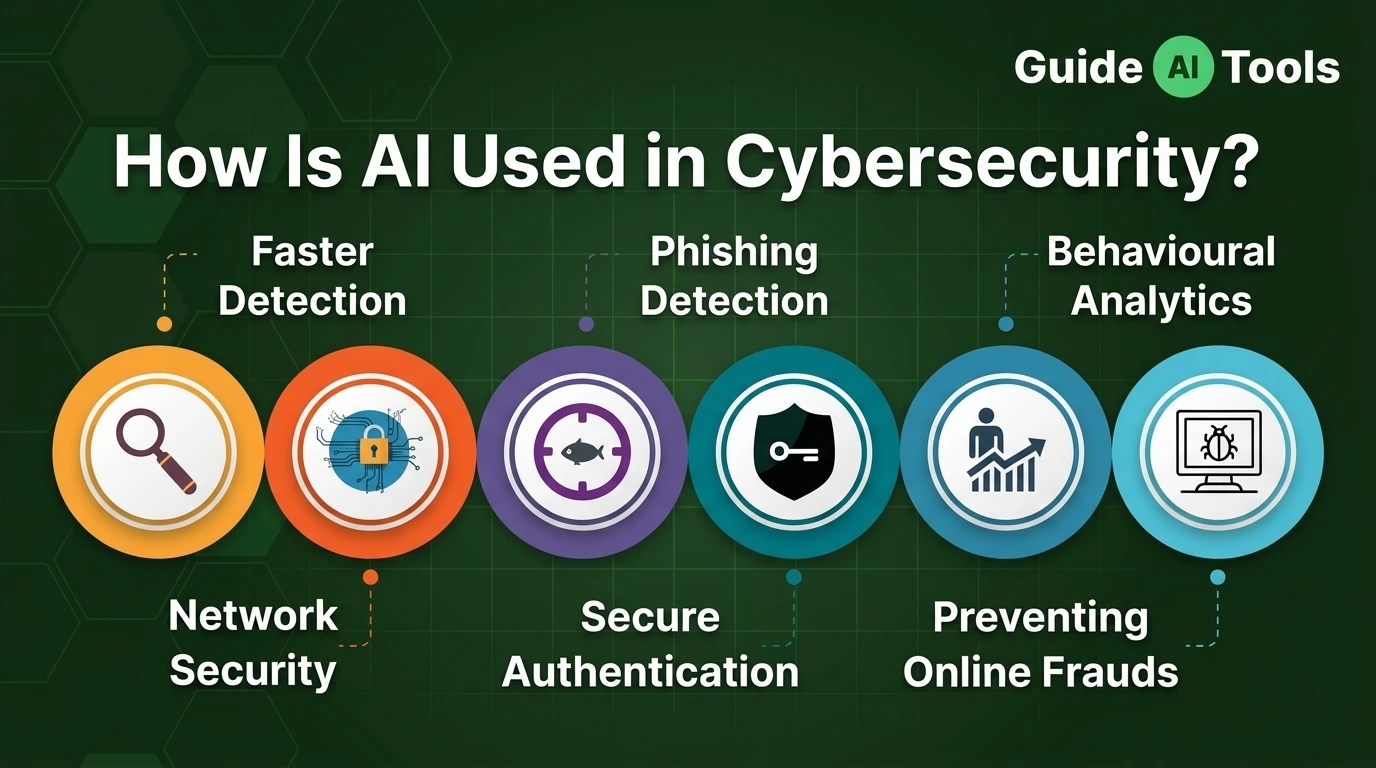
AI in cybersecurity means using models that learn from security data to watch networks, email, and user behavior, spot activity that breaks normal patterns, and flag or block attacks far faster than people can read the same logs by hand. It already guards most large organizations today.
Here is the catch. Defenders and attackers now use the same models. AI writes the phishing email, clones the voice on the call, and reshapes the malware your tools are trying to catch. So this page covers three stories, not one: how AI defends, how AI attacks, and why AI systems now need defending.
What AI in Cybersecurity Actually Means
In plain terms, AI in cybersecurity is software that learns patterns from huge amounts of security data and then acts on what it finds. It reads logs, emails, network traffic, and sign-in records, builds a picture of normal behavior, and raises a flag when something drifts away from that picture. It is one branch of artificial intelligence put to a defensive job.
The role of machine learning
Machine learning does the heavy lifting. Models train on past attacks and normal traffic, then score new events by how closely they match known danger or known safety. If you want the basics first, our guide to machine learning explains how models learn from data.
The role of deep learning
Deep learning handles the messy inputs. Neural networks read raw email text, network flows, and file behavior at a scale no rule set can match. They spot faint patterns across millions of events, which is why they sit inside modern detection engines.
The role of generative AI and security copilots
Generative AI adds a conversational layer. Security copilots summarize incidents, draft reports, and answer analyst questions. They do not replace the detection models underneath. They make those models easier to use and help small teams understand what happened faster.
How AI Defends: The Main Use Cases
The main benefits are speed, scale, and consistency. A human analyst can review a few hundred alerts on a good day. An AI system reads millions of events, connects the related ones, and hands over a short ranked list, the same way at 3 a.m. as at noon.
Threat detection and anomaly detection
AI detects threats by learning a baseline first. The model studies weeks of normal traffic, logins, and file activity, then scores every new event against that baseline. A login at 3 a.m. from a new country, followed by a huge download, scores high and jumps the queue. Analysts then confirm or dismiss it.
The model does not know what an attack is. It knows what different looks like, and different is where attacks hide.
Phishing and email security
Phishing filters used to match known bad senders and links. AI reads the message itself. Using natural language processing, models check wording, tone, sender behavior, and link patterns together, so an email from a lookalike domain gets flagged even when it has never been seen before.
The best systems watch what happens after delivery. Once one copy is confirmed malicious, they pull the message back from every inbox.
Malware analysis
Traditional antivirus works from signatures, fingerprints of known malware files. That fails the day a file changes slightly. AI watches behavior instead. It runs suspicious files in a sandbox and scores what they do: encrypting files, calling home, hiding processes.
Deep learning models trained on millions of samples judge a brand new file by its actions and its code shape. So unseen variants get caught before they spread, not after.
Vulnerability prioritization
Scanners find thousands of flaws, and teams cannot patch everything at once. AI ranks the list by real risk. It weighs how easily a flaw can be exploited, whether exploit code exists, and how valuable the affected system is.
A mid-rated flaw on a public server can outrank a severe flaw on an isolated test machine.
User behavior analytics and insider risk
User and entity behavior analytics, shortened to UEBA, builds a baseline for each person and device. It learns your usual hours, apps, and download sizes. When an account suddenly pulls an entire customer database at midnight, or a quiet printer starts scanning the network, the system flags it.
This is how insider misuse and stolen accounts surface before the damage spreads.
Incident response and SOC automation
A security operations center, or SOC, is the team that watches alerts around the clock. AI triages those alerts, merges duplicates, pulls in context, and drafts a summary with next steps.
Can it replace the analysts? No. It clears the noise so analysts spend their time on judgment calls, like shutting down a live account or calling the legal team. The big decisions stay human.
| AI use case | What the AI does | What it catches | Main limit |
|---|---|---|---|
| Threat detection | Learns a baseline of normal network and user behavior, then scores events that break it | Intrusions, stolen accounts, unusual data movement | Flags harmless odd behavior too, which creates false positives |
| Phishing detection | Reads message wording, sender behavior, and link patterns together | Targeted lures from new or lookalike domains | Very personal lures built from real data can still slip through |
| Malware analysis | Watches what a file does in a sandbox instead of matching a known fingerprint | New malware variants that signatures have never seen | Patient malware that stays quiet during testing can pass |
| Vulnerability management | Ranks flaws by exploitability, known exploit code, and asset value | The flaws attackers are most likely to use first | Ranking is only as good as the inventory and threat data behind it |
| Behavior analytics | Builds a per-user baseline and flags access that breaks it | Insider misuse and hijacked accounts | Needs time to learn, and flags travel and role changes early on |
| Incident response | Triage alerts, merge duplicates, enrich with context, draft summaries | Faster, cleaner queues for human analysts | Suggestions can be wrong, so a human approves the big calls |
How Attackers Use the Same AI
Hackers use the same models for the opposite job. AI helps them write lures in perfect local language, clone voices, reshape malware so signatures miss it, and scan thousands of targets for one weak point. The cost of a convincing attack has dropped to almost nothing.
AI-written phishing at scale
A spear phishing email used to take research and decent writing skills. Now an attacker feeds public profiles into a model and gets a personal lure for each target, in clean grammar, in any language, in hundreds of variants at once. Testing included.
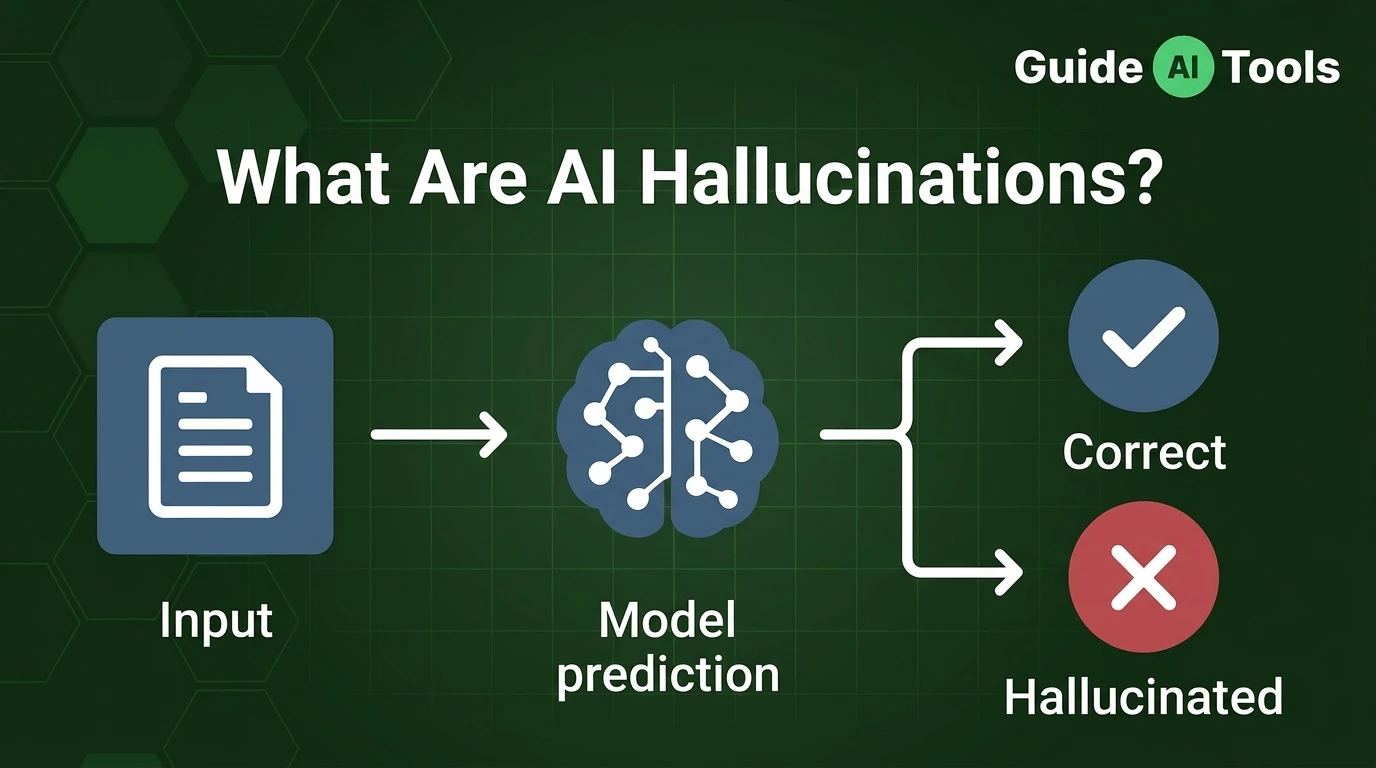
The same models also produce confident nonsense, the failure mode behind AI hallucinations. That is why some lures still carry odd invented details.
Deepfake voice and video fraud
Voice and video cloning turned the video call into an attack surface. Hong Kong police reported a case at the engineering firm Arup where a finance worker joined a video call in which every other participant was a deepfake of a real colleague. He sent about HK$200 million, roughly US$25.6 million, across 15 transfers.
It is the extreme end of a pattern that runs through AI in finance: fake executives ordering urgent, secret payments.
AI-assisted malware and evasion
Attackers use AI to write and rewrite malicious code. Polymorphic malware changes its own shape on every infection, so signature-based tools see a new file each time. Models also help attackers debug exploits and strip out the sloppy errors that used to give them away.
The code is not always better. It is faster, and it never sleeps.
Automated reconnaissance and vulnerability discovery
Reconnaissance used to be slow manual work. AI agents now scan networks, read public documents, map staff from social profiles, and draft exploit plans against the weak points they find. A small crew can research a target the way a large team once did.
The gap between a flaw appearing and an exploit arriving keeps shrinking.
Protecting AI Systems Themselves
An AI system is not just software to protect. It is also a target. It takes instructions from text and data, it often holds access to files, tools, and inboxes, and its answers can be steered by whoever controls its inputs. That makes an AI system a new attack surface.
Prompt injection
Prompt injection is a hidden instruction planted in content an AI assistant reads, such as an email, a document, or a web page. The assistant treats the planted text as an order and obeys it, maybe forwarding data or approving a request. The user never sees the instruction.
It works because the model cannot reliably tell data apart from commands.
Adversarial examples and data poisoning
Adversarial examples are inputs crafted to fool a model, like an image tweaked so a classifier reads it wrong while a human sees nothing odd. Data poisoning goes deeper. Attackers slip bad examples into training data so the model learns the wrong lesson and keeps a blind spot ready for later use.
Both attacks target the learning process itself, not the code around it.
Model theft and data leakage
Models can be stolen without breaking in. Attackers query a model again and again, study its answers, and train a copy that behaves the same. Leakage runs the other way too. Staff paste contracts, code, or customer data into chat tools, and that data can surface in logs, training sets, or someone else’s answer.
The model becomes a door in both directions.
How to defend AI systems
Defense starts by treating the AI like a junior employee with powerful access. Give it the least access it needs. Check what goes in and what comes out. Keep a person in charge of anything that moves money, changes access, or deletes data. Then test the system the way an attacker would, before an attacker does.
- Give AI tools the least privilege they need, never open access by default
- Screen inputs and outputs for planted instructions and leaked data
- Require human approval for high-impact actions
- Log and monitor everything the AI reads, says, and does
- Test the system with red team exercises and fix what breaks
The NIST AI Risk Management Framework gives teams a shared structure for this work, from mapping risks to measuring how the controls perform.
The Limits of AI in Cybersecurity
AI in security work fails in predictable ways. The biggest is noise. Models flag odd but harmless behavior, and analysts drowning in false positives start ignoring alerts altogether. Alert fatigue is how real attacks slip past expensive tools.
AI advice can also be wrong with confidence. It may rank a harmless event as critical or miss the one that matters, and a tired analyst can follow it down the wrong path. In a Swimlane survey of 500 security professionals, 48 percent said they would trust their own judgment over an AI recommendation when the two conflicted. That instinct is a safety feature, not a flaw.
Novel attacks are another weak spot, because models learn from the past, and a truly new trick has no past to learn from. Add cost, messy log data, and a shortage of people who can run these systems well, and the picture is clear. AI speeds up security work, it does not remove the need for a security team. That is also where the wider risks of AI show up in daily practice.
How an Organization Starts With AI Security
Start small. Pick one high-volume task, such as alert triage or phishing analysis, and let AI prove itself there. Fix your data first, because a model learns from the logs you feed it, and messy logs teach messy lessons.
Keep a named human in charge of response decisions, with the power to overrule the tool. And set rules for the AI tools your staff already use, including what data may never be pasted into them.
Small scope, clean data, human control. That order matters more than the brand you buy.
FAQs
What is AI in cybersecurity in simple terms?
AI in cybersecurity means security software that learns what normal activity looks like on your network and warns you when something breaks the pattern. Instead of checking files against a list of known threats, it watches behavior. That helps it catch new attacks nobody has named yet.
Can AI stop all cyber attacks?
No. AI catches known patterns fast and spots strange behavior early, but it misses novel tricks, makes false alarms, and can be fooled by crafted inputs. Attackers adapt to every defense. AI lowers your risk and buys your team time. It does not make any network unbreachable.
How do hackers use AI?
Hackers use AI to write personal phishing emails at scale, clone voices and faces for fraud calls, reshape malware so scanners miss it, and scan networks for weak points automatically. The tools are mostly the same ones defenders use. The difference is the goal, not the technology.
Is AI better than antivirus software?
For most threats, yes, with a caveat. Antivirus matches files against known signatures, so it misses new variants. AI watches behavior, so it can catch malware it has never seen. The two ship together in modern endpoint tools. AI is the smarter layer, not a full replacement stack.
What is the biggest risk of AI in cybersecurity?
The biggest risk is misplaced trust. Teams may follow a confident AI recommendation without checking it, or feed the system poor data and believe the clean dashboard it produces. Attackers also attack the AI itself. A tool you trust blindly becomes the easiest door into your network.
Do small businesses need AI security tools?
Yes, but at the right size. Small firms face the same phishing and ransomware, with no team to watch it. Built-in AI protection in email and endpoint tools gives them detection they could never staff. They rarely need enterprise platforms. They need the basics, switched on and watched.
Conclusion
So the honest summary is a balance. AI defends at a scale humans cannot match, and attackers use the same scale against you. The newest shift is the third role: AI as the thing being attacked. Teams that plan for all three stay ahead.
If you are weighing the upside, our overview of the benefits of AI puts this field in wider context. Then work through the fundamentals series, or browse the security categories in our AI tools directory to see the tools behind these use cases.

Related Blog Posts