What Is Multimodal AI? Complete Architecture & Applications Guide
Human perception never operates inside a single sensory vacuum. When you watch a movie, your brain processes visual frames, spoken dialogue, background sound, and text subtitles at the exact same moment.
Early AI models acted like blind and deaf text readers.
Multimodal AI bridged that gap by giving neural networks eyes, ears, and cross-sensory contextual reasoning.
What Is Multimodal AI in Simple Terms?
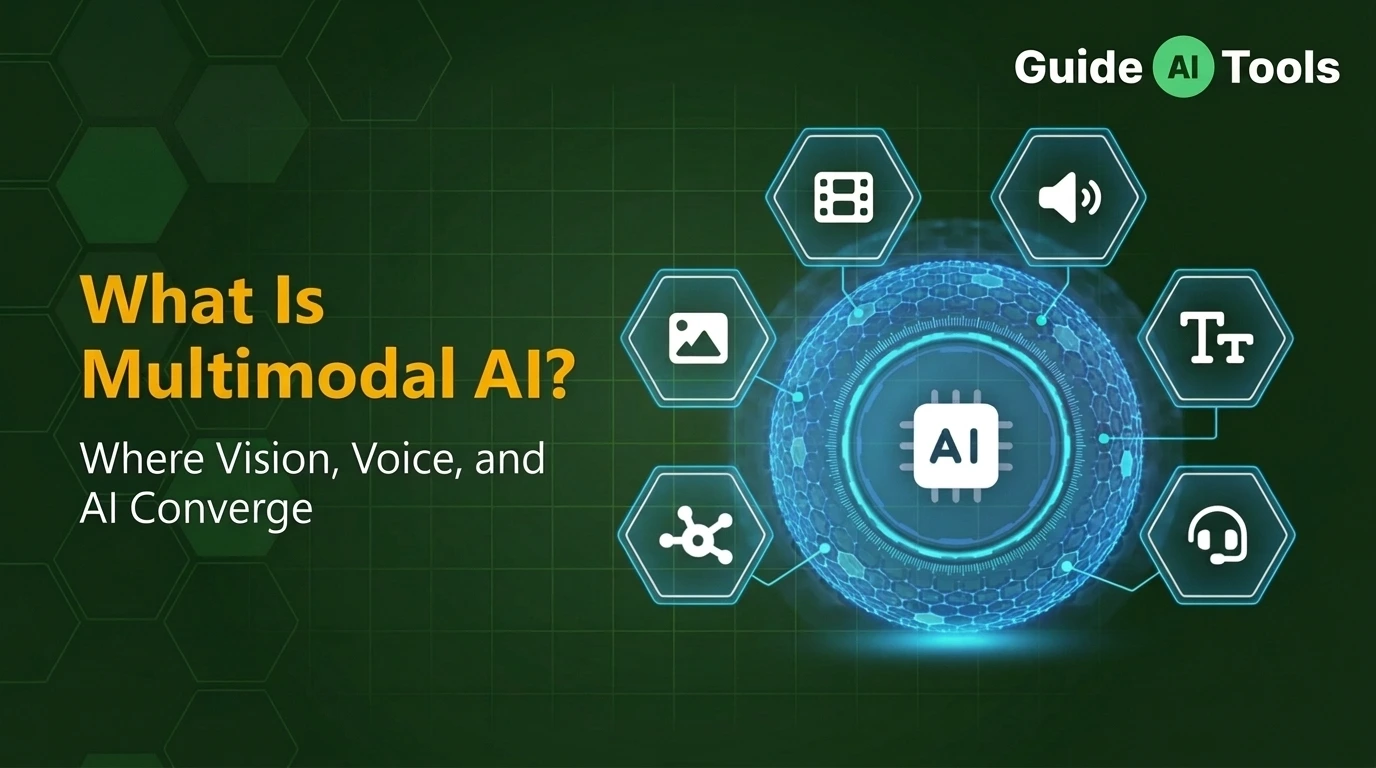
Multimodal AI is an artificial intelligence architecture that processes, connects, and generates information across multiple data formats, including text, images, video, audio, and sensor signals, within a single unified vector space. Unlike single-domain systems, it analyzes cross-sensory context simultaneously. Models like Gemini and GPT-4o rely on this multimodal setup.
In my practical testing, stacking separate single-domain models created heavy processing latency and context loss.
Multimodal models solve that problem. They map disparate real-world inputs into a single shared mathematical space for simultaneous reasoning.
Multimodal AI processes text, images, audio, and video inside a single unified vector space.
At GuideAITools, we track how these architectures reshape software development workflows. To build a solid foundation, read our core guide on artificial intelligence basics.
Unimodal vs Multimodal AI: Understanding the Architectural Shift
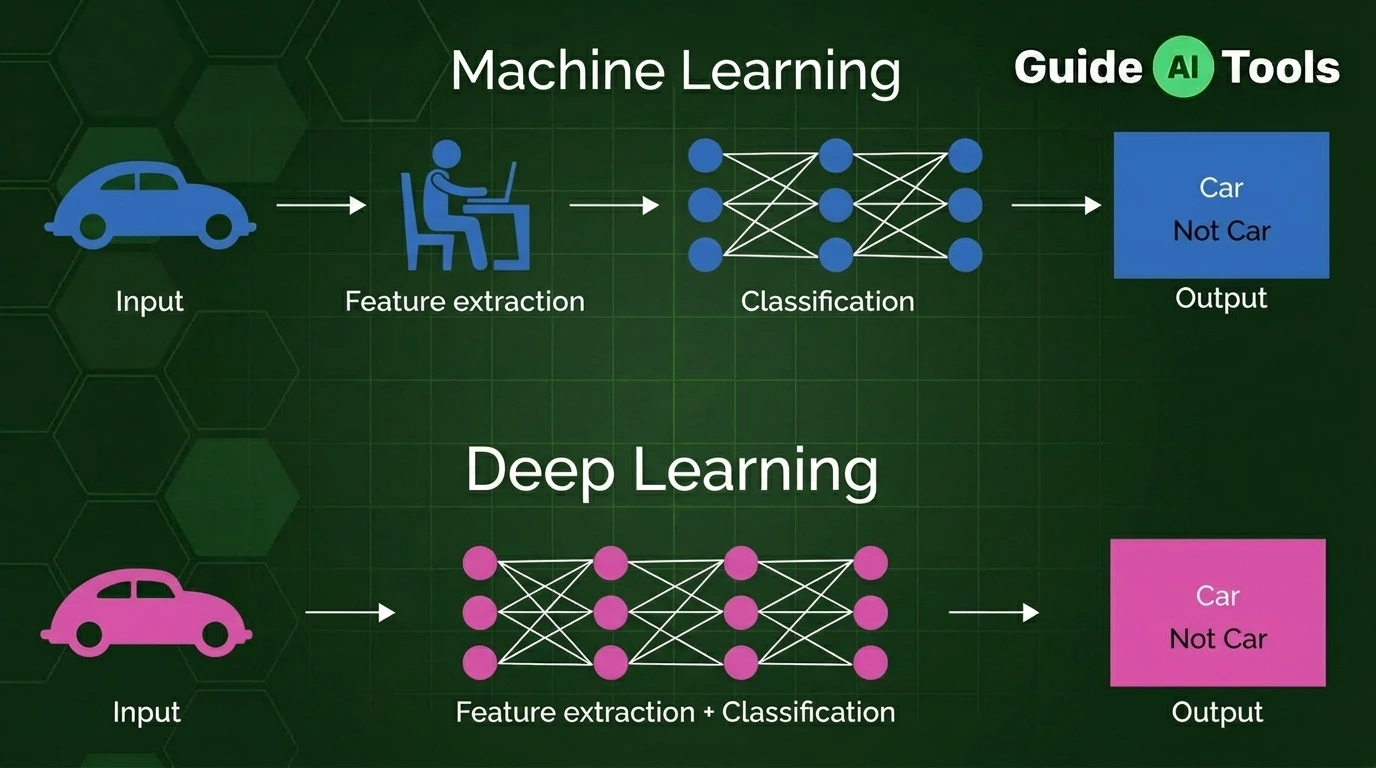
Unimodal models lived inside strict domain silos. You had text-only language models, vision-only convolutional networks, or audio-only speech recognition engines.
When engineers chained those separate models together, data conversion between steps caused context loss and noticeable delays.
Multimodal AI replaced those pipelines by aligning disparate sensory inputs directly into a shared embedding space.
Multimodal architectures map pixels, waveforms, and text tokens into aligned spatial coordinates.
The core technical distinctions between unimodal and multimodal systems appear in the comparison table below.
| Feature | Unimodal AI Models | Multimodal AI Models |
| Data Inputs | Single Modality (Text OR Images OR Audio) | Multiple Modalities (Text + Vision + Audio + Video) |
| Contextual Synergy | Blind to cross-domain relationships | High cross-modal contextual understanding |
| System Architecture | Separate isolated neural networks | Unified joint embedding space or cross-attention layers |
| Execution Complexity | Low compute memory overhead | High GPU compute and memory bandwidth requirements |
| Primary Use Cases | Basic sentiment analysis, image tagging | Visual reasoning, real-world robotics, video analysis |
To explore isolated visual processing, read our explainer on computer vision concepts. For text processing setups, check out our guide on natural language processing mechanics.
How Does Multimodal AI Work?
A multimodal AI pipeline processes mixed inputs through four core mathematical stages.
First, modality encoders convert raw inputs into structured token vectors. Visual patches turn into image tokens, speech waveforms convert to audio frames, and text words turn into standard token embeddings.
Second, a joint embedding space aligns those distinct tokens using contrastive learning models like CLIP.
Think of it like a multidimensional map. On this map, a photo of a dog and the written word ‘dog’ share identical spatial coordinates.
Third, cross-attention mechanisms allow language layers to query visual and audio vectors directly during neural network inference.
Finally, fusion strategies handle input integration. Early fusion merges raw tokens at the input layer, while late fusion combines high-level decision outputs from separate branches.
Cross-attention mechanisms allow language layers to query visual vectors directly during neural inference.
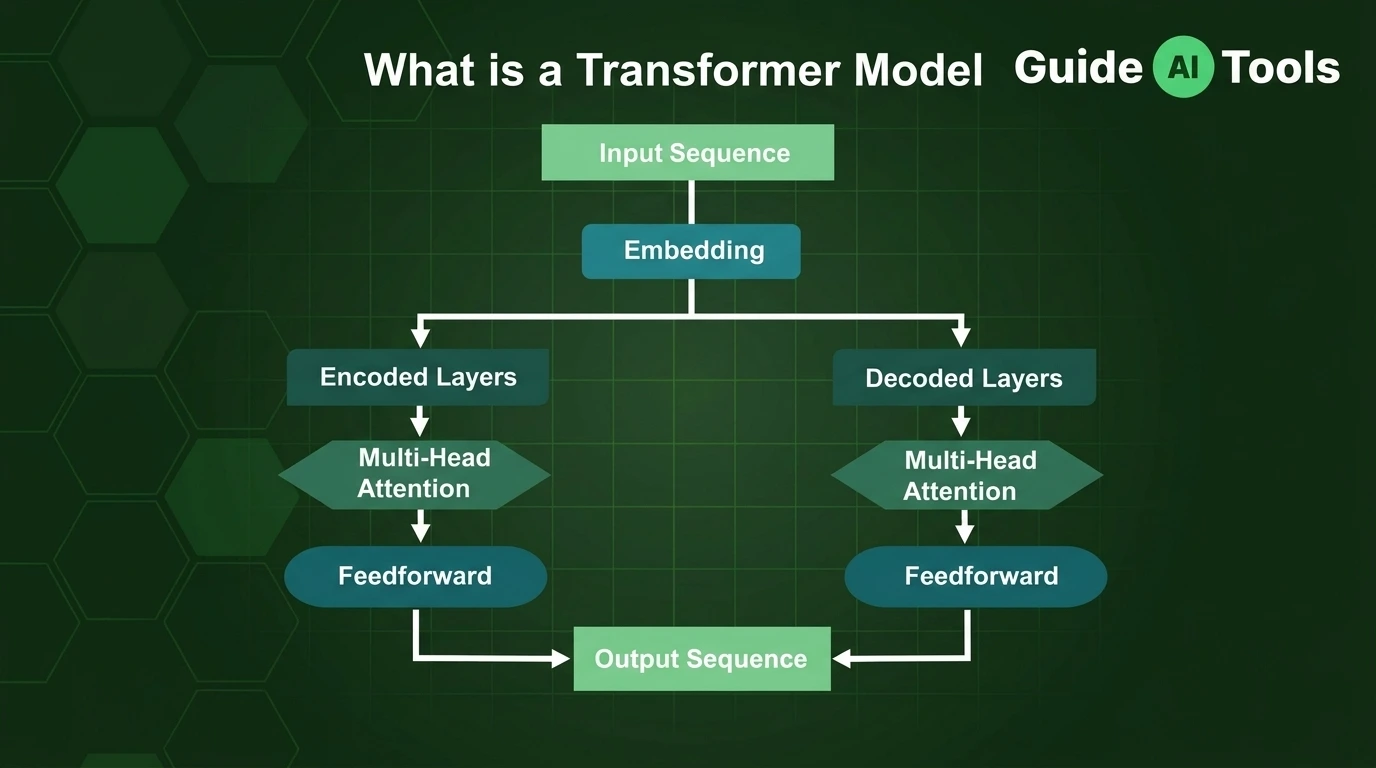
Academic researchers at the Stanford Institute for Human-Centered AI publish extensive benchmarks on these multi-sensory alignment techniques. To understand the underlying neural attention engine, read our breakdown of the transformer model architecture.
Native Multimodal AI vs Post-Hoc Adapter Architecture
Engineering teams build multimodal systems using two distinct structural choices.
Post-Hoc Vision Adapters (Early Generation)
Models like LLaVA and early GPT-4 Vision builds attached pre-trained vision encoders to existing text language models using adapter layers. This approach speeds up development time, but translation loss occurs as data passes between the separate vision and text layers.
Native Multimodal Models (Next-Gen Architecture)
Native models like Gemini 1.5 Pro, GPT-4o, Claude 3.5 Sonnet, and Chameleon train on text, audio, and visual tokens simultaneously from day one. This unified training yields zero-latency cross-modal reasoning and faster response speeds.
| Approach | Training Pipeline | Primary Advantage | Structural Limitation |
| Post-Hoc Adapters | Separate encoders stitched to text LLMs | Faster to build using existing LLMs | Translation loss between vision and text layers |
| Native Multimodal | Joint pre-training across all modalities | Zero-latency cross-modal reasoning, native speech and video processing | High pre-training GPU compute costs |
Native multimodal models pre-train on text, vision, and audio tokens simultaneously from day one.
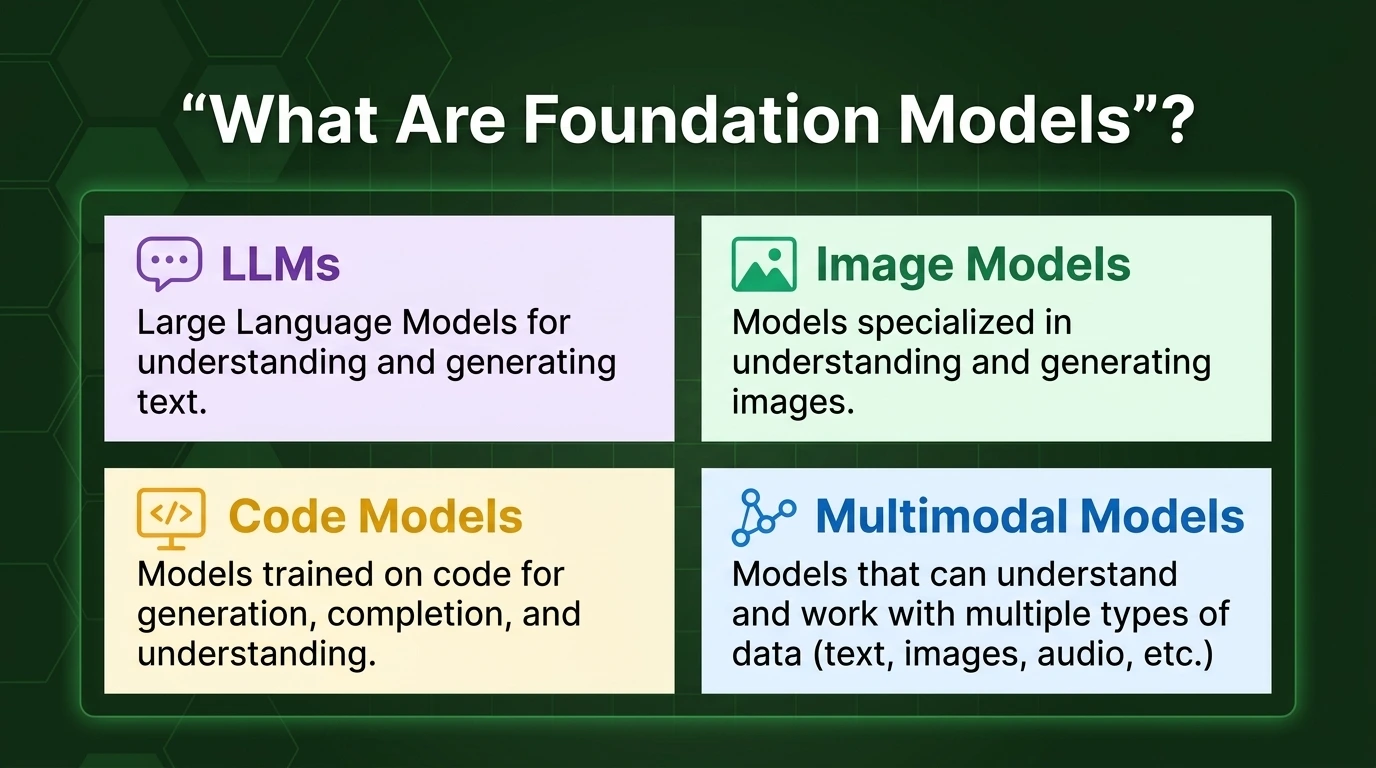
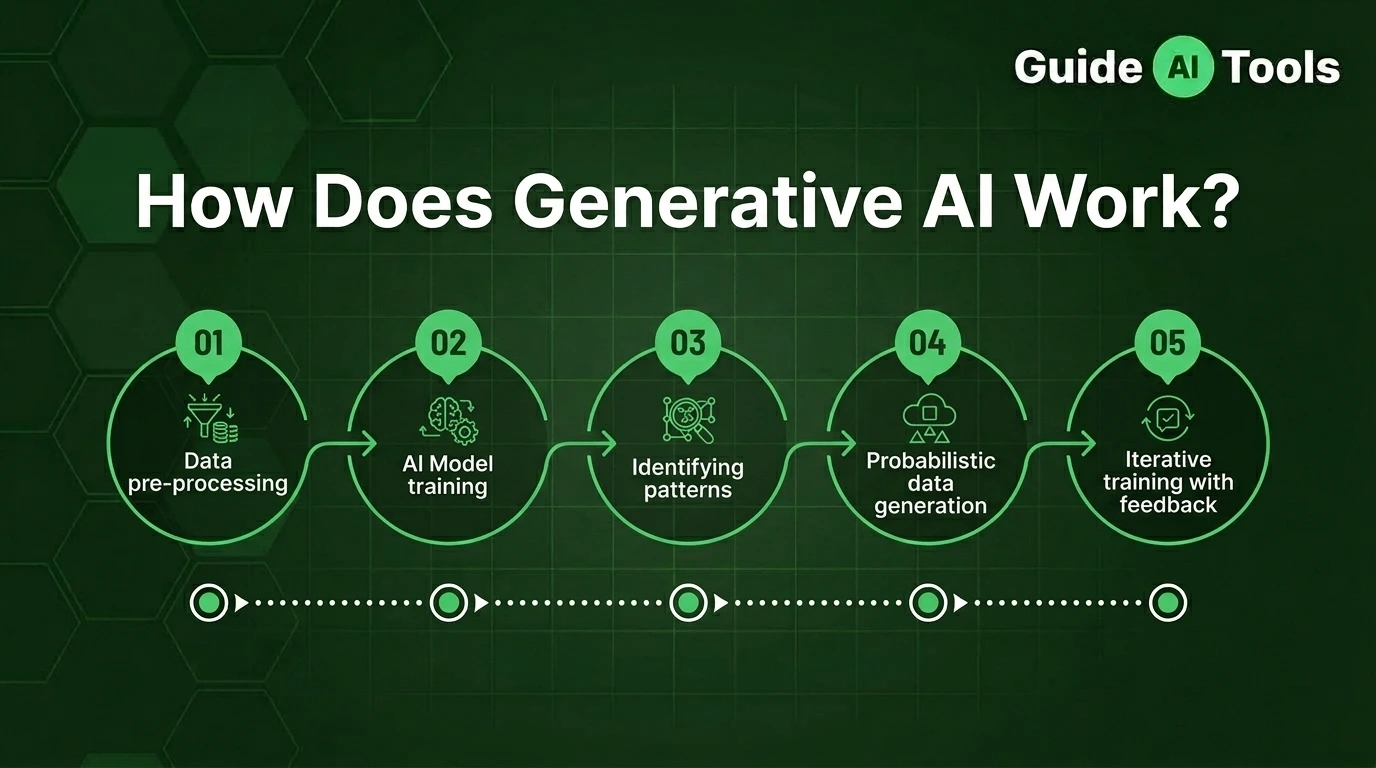
To study generative model pipelines, explore our guide on generative AI systems. You can also review how these systems scale by reading our report on foundation models in machine learning.
Key Industry Applications of Multimodal AI
Multimodal systems handle tasks that text-only models cannot manage.
In autonomous driving and robotics, systems combine live camera streams, LiDAR distance telemetry, and audio signals to navigate physical environments in real time.
In healthcare, diagnostic systems cross-reference radiologist notes with X-ray images and historical patient charts to spot anomalies.
In media production, editors search video archives using natural language prompts and execute real-time voice translations across languages.
Unified neural representations let automated systems reason across visual and textual data simultaneously.
At GuideAITools, we test how software teams integrate these multi-sensory models into live production applications.
Limitations and Engineering Challenges of Multimodal AI
Building and deploying multimodal AI introduces significant technical hurdles.
Cross-modal hallucinations remain a major issue. A strong text prompt can cause a model to misinterpret subtle visual details in an image.
Memory bandwidth presents another barrier. High-resolution video frames and raw audio streams drain GPU VRAM quickly during inference.
Data alignment is also difficult. Sourcing massive, clean datasets with perfectly paired text, visual, and audio data requires significant manual oversight.
Cross-modal hallucinations occur when dominant text attention weights override fine visual details in token matrices.
If you need to analyze synthetic text or check generated outputs for reliability, test our top-rated AI content detector tools.
FAQs
What is multimodal AI in simple terms?
Multimodal AI is a type of artificial intelligence that can process, understand, and generate text, images, video, and audio together inside a single model.
Is GPT-4o a native multimodal model?
Yes. GPT-4o was designed and pre-trained as a native multimodal model, processing text, visual, and audio inputs end-to-end within a single neural network.
What is the difference between multimodal AI and generative AI?
Generative AI focuses on creating new content formats, while multimodal AI focuses on connecting and processing multiple input data types simultaneously.
How does multimodal AI handle video inputs?
Video inputs break down into sequential spatial image frames and synchronized audio waveforms, which the model processes as a continuous stream of tokens.
What is a joint embedding space in multimodal models?
A joint embedding space is a shared mathematical coordinate system where text tokens, image patches, and audio vectors map to common spatial locations based on meaning.
Can multimodal AI run on local devices?
Smaller quantized multimodal models run on mobile chips, but processing high-resolution video and continuous audio streams still requires dedicated GPU memory.
The Future of Multimodal AI
Multimodal architectures push artificial intelligence past the constraints of text-only chat interfaces. Aligning visual vectors, sound waves, and language tokens creates systems that interact with the physical world more naturally.
Look, attention mechanisms and fusion layers continue to evolve.
At GuideAITools, we track active model releases and framework updates as they launch. Browse our directory to compare the latest multimodal tools and software implementations.

Related Blog Posts